Daedong Law 1651: Chungcheong Reform and Kim Yuk's Role
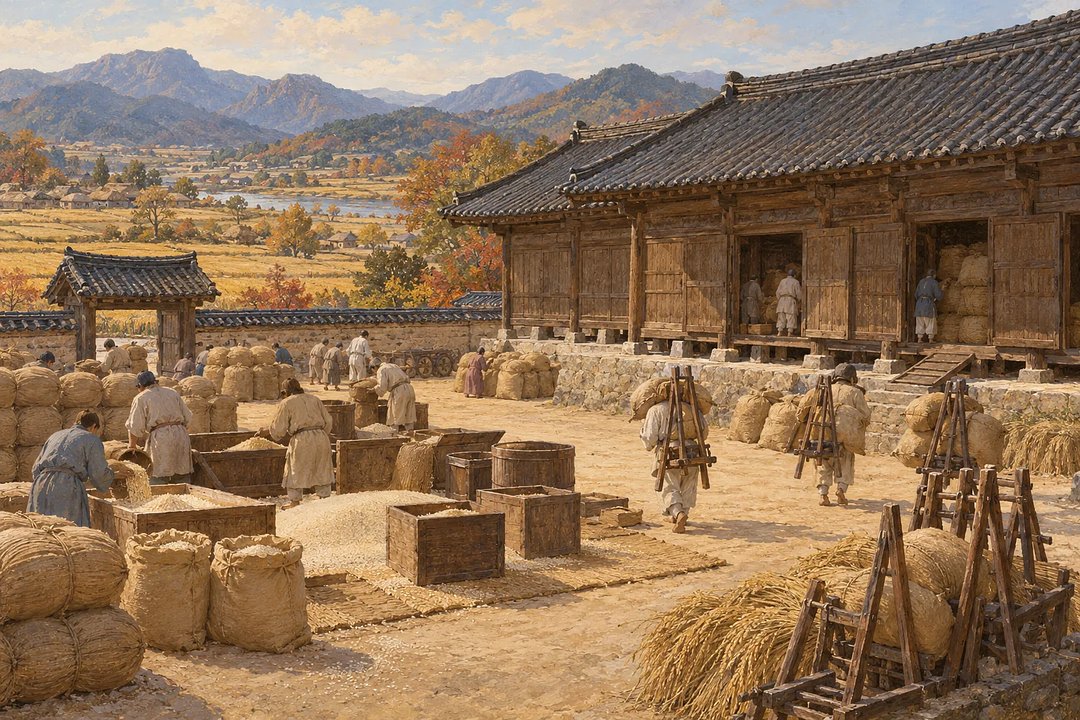
If you are checking Chungcheong's tax rate in 1651, the answer is 10 du of rice annually per 1 gyeol of land, not the later rate of 12 du. The Hoseo Daedong Law collected 5 du in spring and 5 du in autumn. Kim Yuk's repeated proposals helped secure implementation in Chungcheong first.
What changed in the tribute burden
Instead of obtaining assigned tribute goods, obligations were assessed by land measured in gyeol. Revenue covered local expenses before the remainder went to the central government. This explains why the reform concerned both tax collection and spending: replacing tribute goods alone would not resolve additional collections for local costs.
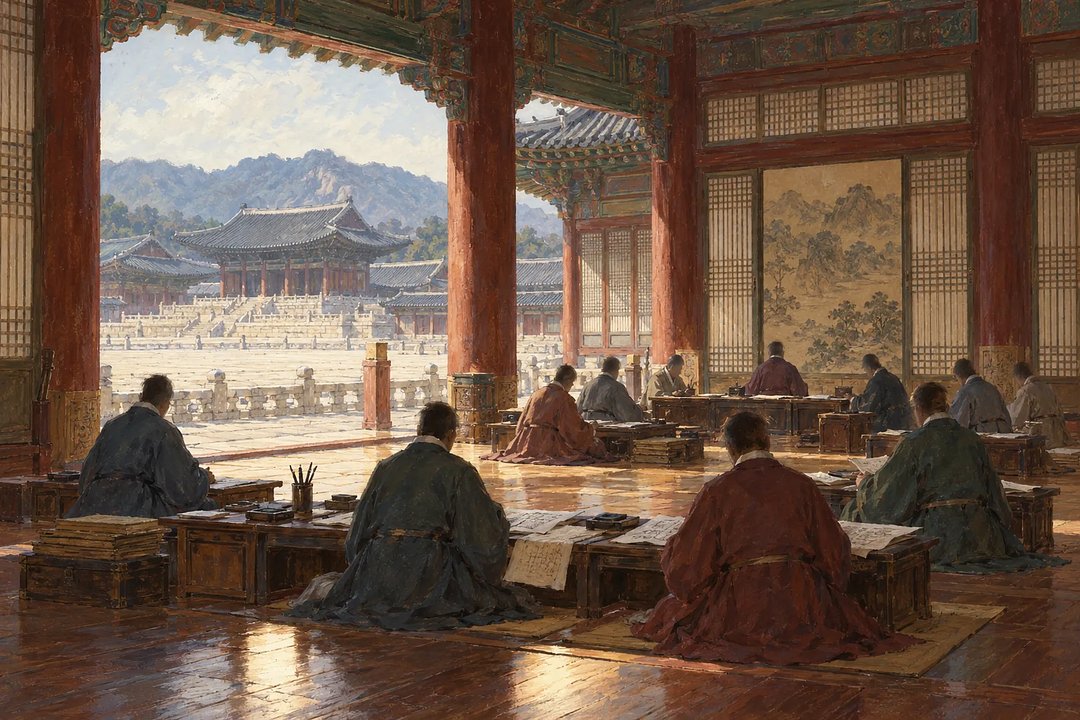 Historical painting of Joseon officials reviewing documents at low desks in a palace hall overlooking a courtyard
Follow the Daedong Law through the records
In the original article on Injoys, you can compare the tribute systems and follow a timeline of regional expansion. It distinguishes the initial rate from later rules, helping avoid a misleading account of the reform, and refers to the Annals of Hyojong and historical reference sources.
Read the full article on Injoys
A checklist for interpreting the reform
When preparing notes, you can keep three distinct points separate:
- Decision: 1651 marks the decision to implement the law in Chungcheong.
- Detailed rules: 1654 marks their revision and supplementation.
- Tax scope: the Daedong tax remained separate from jeonse, the existing land tax. It did not combine all taxes into one.
Keep the region and units attached
Use the initial 10 du figure for Chungcheong in 1651. A du measures grain volume and is also called a mal. A gyeol was a taxation unit that accounted for land productivity, so you cannot convert it into a fixed area in square meters. Rates and payment methods varied across regions and periods.
What else needs clarification
Why did Kim Yuk's earlier proposal stall?
Postwar disruption and concerns about insufficient state revenue delayed acceptance. Some opponents wanted to revise the gongan, the register of tribute goods and quantities, before changing collection methods.
Could mountain counties pay in cloth?
Yes. Chungcheong's 1651 regulations allowed 1 pil of cotton cloth instead of 5 du of rice in mountain counties. This was a provision for that region and period.
How much did farmers' burdens fall?
The initial rate alone cannot establish the reduction. The earlier tribute burden must be compared with actual additional collections in each region.
For a closer check, you can start with the cited entry in volume 7 of the Annals of Hyojong and compare the implementation decision with the later rules.
Read the full article on Injoys
This post was written with assistance and published on a channel run by Injoys (injoys.com). The original article and its sources are at the link above.


Comments
Post a Comment