2026 Chuseok Charye Table: Five-Row Order and What You Can Simplify
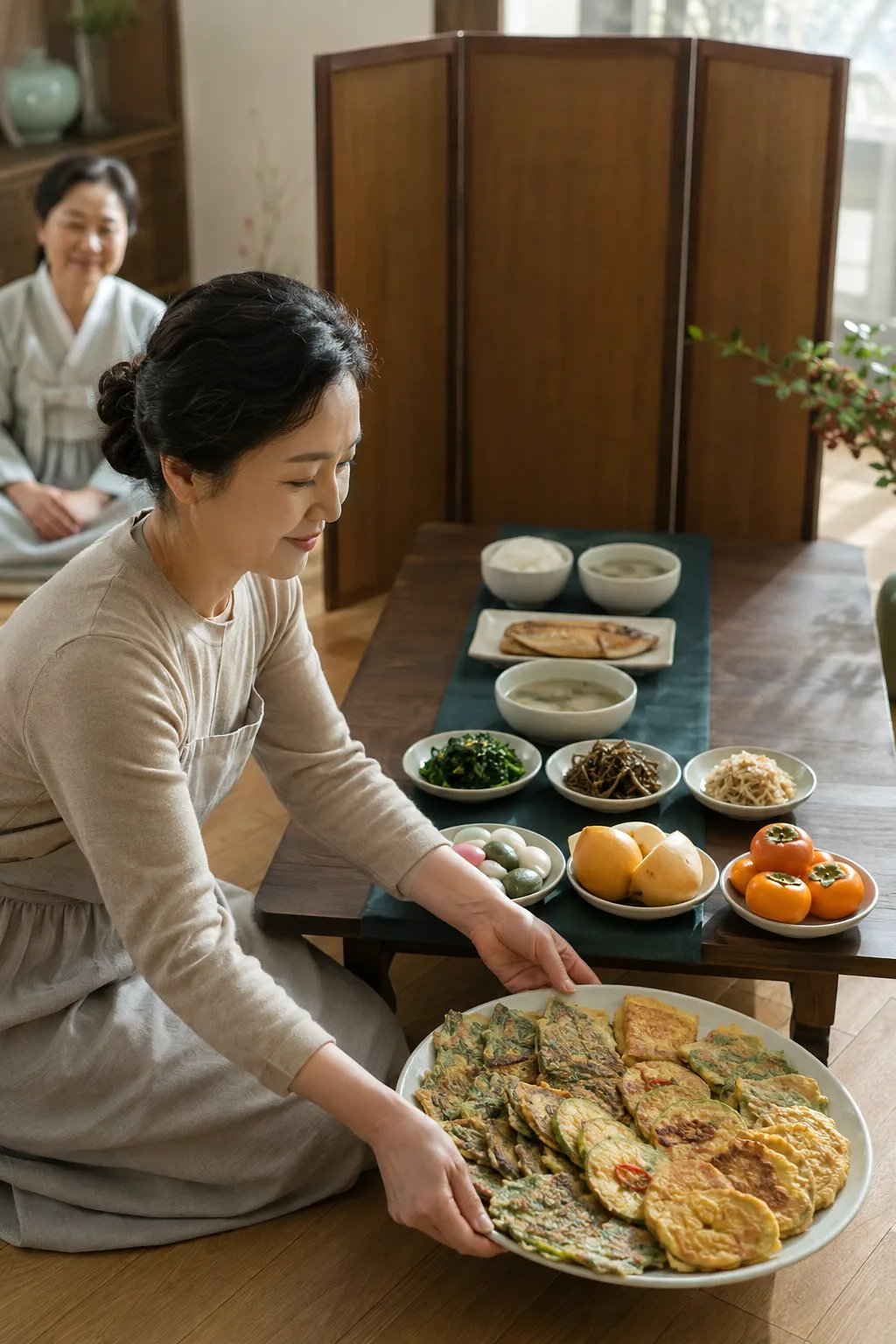
If you are preparing charye for Chuseok 2026, you do not have to treat five rows, jeon, several soups, or fixed fruit positions as mandatory. The customary five-row order starts nearest the ancestral tablet with rice and soup, followed by grilled dishes and jeon, tang, seasoned vegetables and dried foods, and fruit—but your family may reduce the dishes and work according to its traditions and circumstances.
The article lists Chuseok as Friday, September 25, with September 24 as the day before and September 26 as the day after. You should still verify the exact date, day of the week, and statutory holiday period through the government’s official public holiday calendar.
How the 2026 Chuseok Charye Table Is Arranged
You count the rows from the side nearest the ancestral tablet, not from where you face the table. The first row commonly holds rice, soup, a wine cup, utensils, and songpyeon; the second has grilled dishes, skewers, or jeon; the third has tang, meaning soup; the fourth has seasoned vegetables, dried meat or fish, kimchi, or sikhye; and the fifth has fruit.
This layout helps you understand the traditional model, but it does not determine whether your rite is valid. You may center the table on songpyeon, prepare only one grilled dish, reduce the vegetables and fruit, make one soup, or omit soup and jeon.
What You Can Simplify Without Treating Custom as Law
Rules such as hongdongbaekseo, joyulisi, and eodongyukseo are widely repeated placement maxims, not universal requirements for every household. If left and right become confusing, you can check old family photographs or records; without a family precedent, you can choose one consistent, safe arrangement by food category.
You can also reduce multiple kinds of jeon, fried foods, separate meat, fish, and vegetable soups, similar grilled dishes, extra vegetables chosen for color, and numerous fruits. Keeping one or two foods meaningful to your family lets you preserve tradition while reducing preparation and leftovers.
A Family Checklist Before Shopping
- Confirm how many people will attend and when you will hold charye.
- Agree whether you will hold charye, a memorial gathering, or visit ancestral graves.
- Choose an ancestral tablet, a paper jibang, or a photograph.
- Decide which foods you will retain, omit, cook, or purchase.
- Assign shopping and cooking responsibilities and plan how you will handle leftovers.
If you use a jibang, you should check an existing family version because its wording varies. You should not burn it inside an apartment, on a balcony, or anywhere fire is prohibited.
What the Original Article on Injoys Adds
The original article on Injoys gives you the complete row-by-row examples, simplified menu options, jibang guidance, and a six-step charye sequence ending with eumbok, when you share the offered food. You can use those details to discuss changes before the holiday instead of debating them immediately before the rite.
Read the full article on Injoys
Who Should Check First and What You Can Do Today
This guidance is most relevant if you observe Chuseok charye, a holiday rite honoring ancestors; it differs from gijesa, which is generally based on an ancestor’s death date. Your religion, region, family tradition, work schedule, and travel plans may support a simpler rite or a memorial gathering instead.
Today, check the government’s official public holiday calendar, then ask your family to confirm attendance, timing, foods, roles, and whether you will use a tablet, jibang, or photograph. Review the original article on Injoys for the full preparation framework.


Comments
Post a Comment