Battle of Salsu 612: Strategy and Outcome
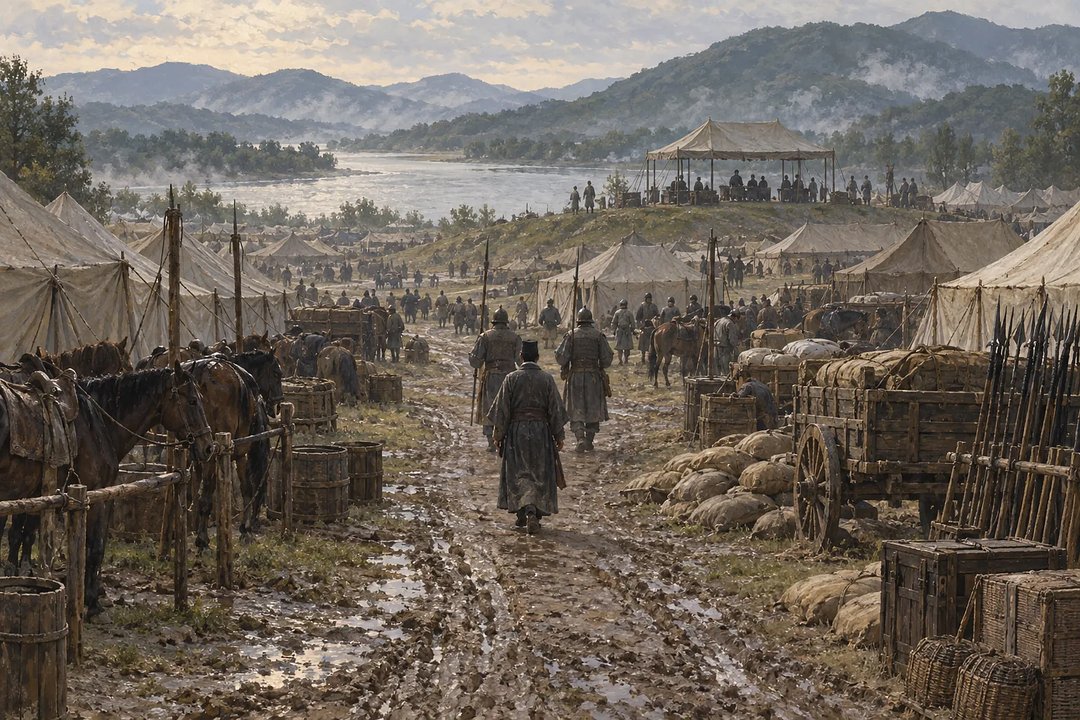
If you know the Battle of Salsu as a flood attack, the historical account supports a narrower conclusion: Goguryeo defeated retreating Sui forces by attacking during a river crossing. The battle took place in the seventh lunar month of 612 and thwarted the Sui advance on Pyongyang. Breaking an embankment to unleash a flood is not established by the cited record.
How the retreat created an opening
Eulji Mundeok's decisions shaped how the victory developed. He entered the Sui camp under a false surrender to assess its strengths and weaknesses, then drew the enemy deeper into Goguryeo territory. Supply shortages and fatigue weakened the advancing forces.
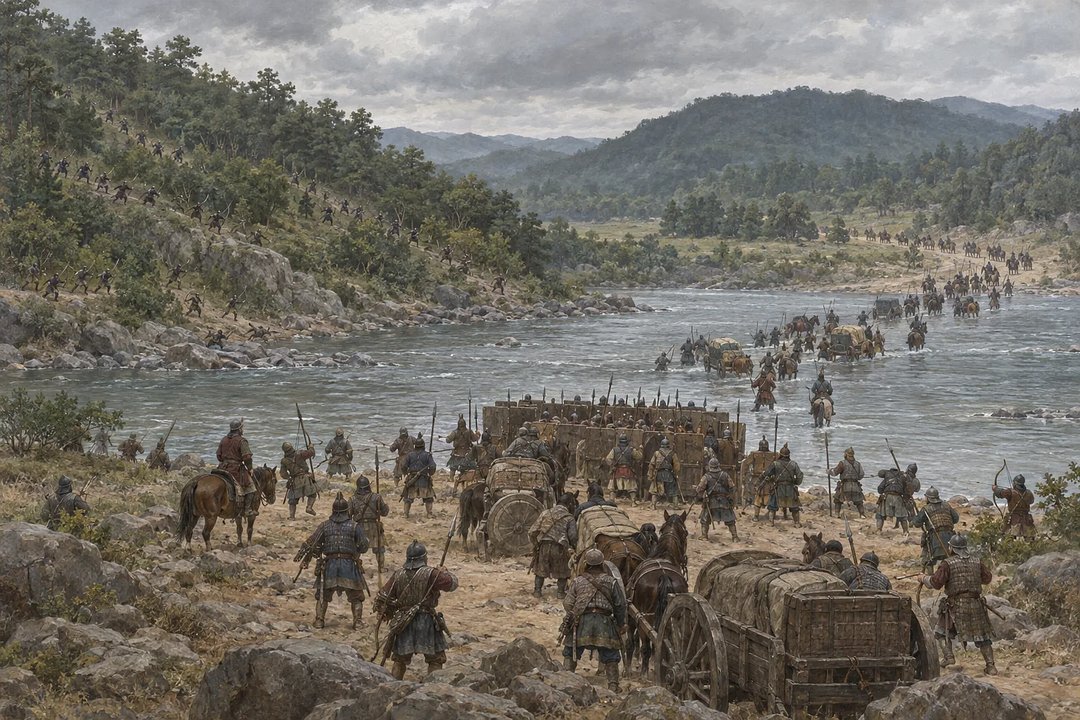
During the Sui retreat, Goguryeo attacked the rear guard when about half the troops had crossed the Salsu River. The account places the decisive action at this vulnerable crossing.
What the full account helps distinguish
In the original article on Injoys, you will find a lunar-calendar timeline and a table separating troop figures by the forces and locations they describe. Its distinction between recorded events and later interpretations helps explain both the flood story and the scale of the defeat.
Read the full article on Injoys
A checklist for reading the numbers
Before drawing a conclusion from a dramatic battle statistic, use these checks:
- Identify the starting force: 305,000 refers to the nine armies that first crossed the Liao River in 612.
- Identify the return point: 2,700 refers to troops who returned to Liaodong Fortress after the defeat.
- Keep the conclusion within those limits: subtracting the figures does not establish the number killed, and the return figure does not count every survivor of the entire expedition.
Battle of Salsu in the wider war
If you want to understand the war's outcome, keep this victory within the 612 campaign. Sui invaded again in 613 and 614, so Salsu did not immediately end the conflict.
The central source, the Samguk Sagi, is a historical work compiled in 1145, rather than an eyewitness report from 612. For a closer check of the flood claim, consult the Korean History Database note identified in the original article on Injoys.
Read the full article on Injoys
This post was written with assistance and published on a channel run by Injoys (injoys.com). The original article and its sources are at the link above.


Comments
Post a Comment