Hunminjeongeum 1446: Promulgation Explained
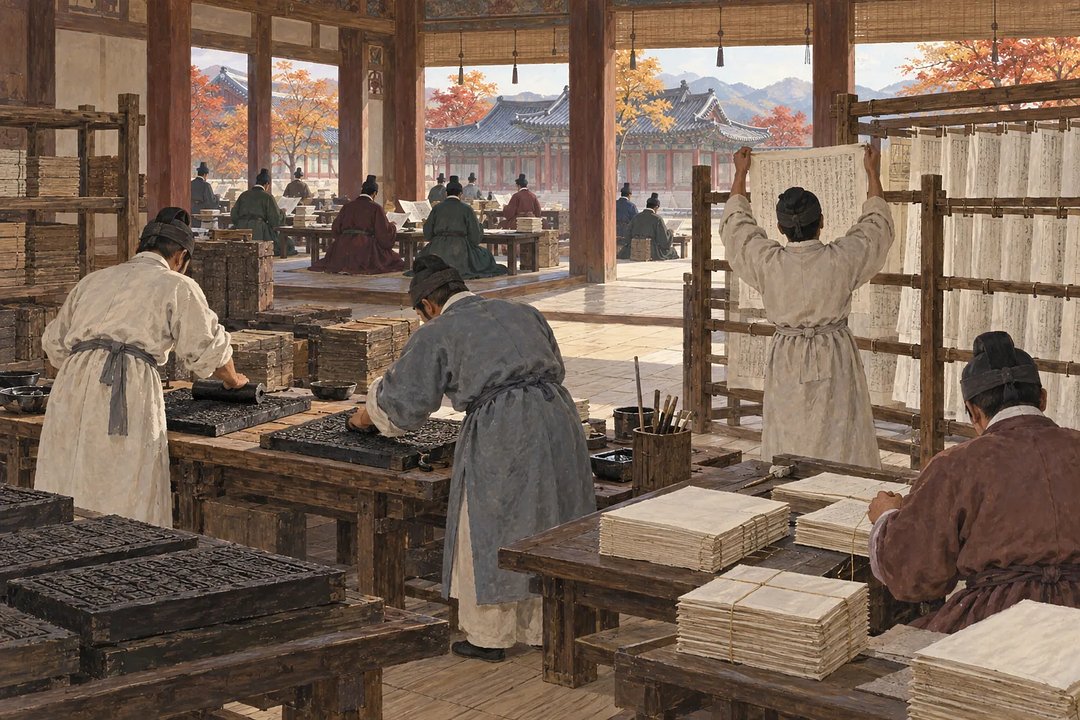
If you associate Hunminjeongeum's creation with 1446, separate two events: King Sejong created its 28 letters in 1443; the explanatory Haerye edition followed in 1446. Hunminjeongeum names both the writing system and the book, which explains why those dates can be confused.
Separate the invention from its explanation
The useful distinction is between making a script and explaining how to use it. Sejong sought to make Korean speech easier to write. The Haerye edition connected letter design with rules for combining sounds and examples of actual words.
The 1444 opposition concerned foreign relations, education and administration, as well as implementation. Reducing it to an attempt to stop people learning goes beyond the recorded arguments.
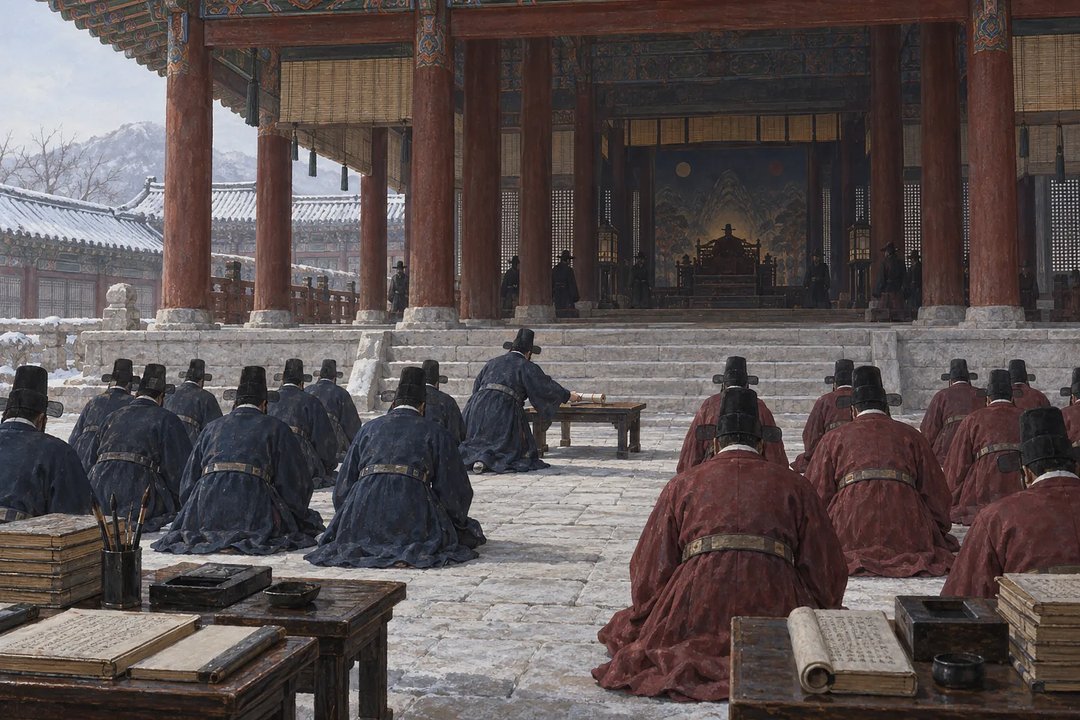
Read the Hunminjeongeum evidence in context
In the original article on Injoys, you can compare a dated timeline with a table of the opposition's arguments and Sejong's responses. Its distinction between recorded actions and uncertain outcomes makes it useful for checking a historical summary.
Read the full article on Injoys
Build a more accurate history note
If you are preparing a short explanation, use these checks to keep separate claims from slipping into one sentence:
- Creating letters: attach 1443 to Sejong's creation of the script.
- Explaining their use: attach 1446 to publication of the Haerye edition.
- Measuring learning: treat its examples involving 94 words as book content, not a count of words people learned.
The book's structure shows how rules and examples worked together. It does not establish how widely the script circulated.
Keep the examination rule within its scope
When you reach the 1447 order, read igwa as the examination for selecting administrative clerks. Candidates had to pass Hunminjeongeum before taking the other examinations; the order also covered each government office's igwa examinations. For candidates from Hamgil Province, it applied from the next triennial examination year.
This was not a requirement for every civil service examination, nor proof of widespread public adoption.
For a next step, compare the timeline's dates in the original article on Injoys. Its historical months and days use the lunar calendar and have not been converted to modern Gregorian dates.
Read the full article on Injoys
This post was written with assistance and published on a channel run by Injoys (injoys.com). The original article and its sources are at the link above.


Comments
Post a Comment