Nephron 99% Reabsorption Example Guide
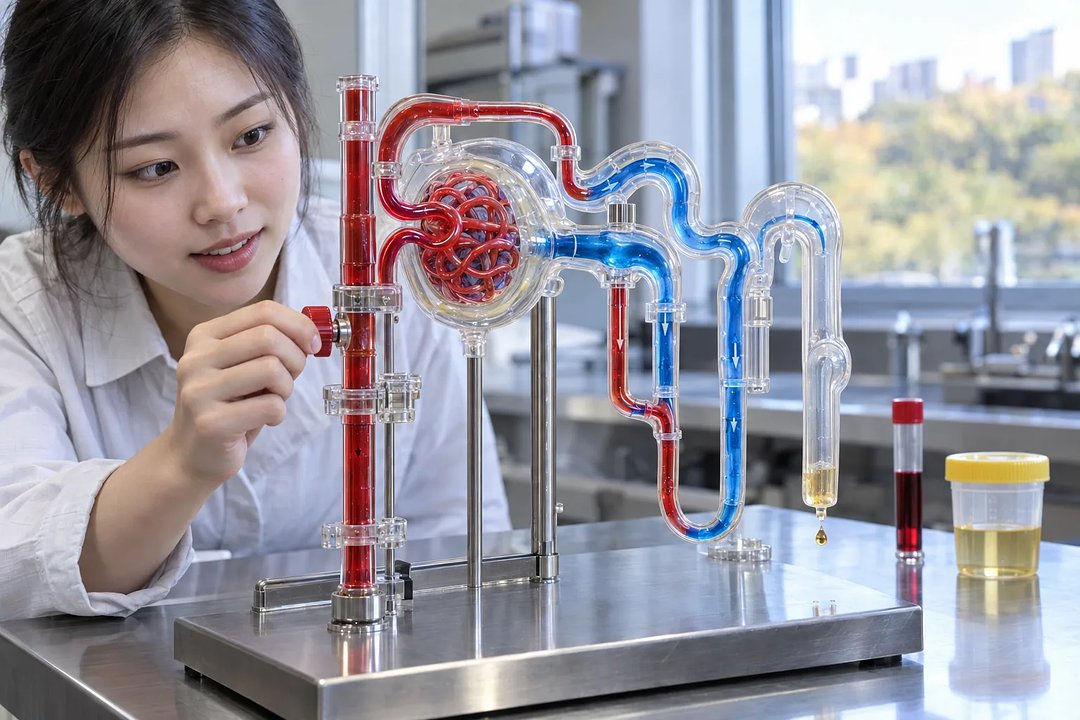
If you are comparing daily urine output with 1.5 liters, that amount is an illustrative example, not a target for everyone. Assessing kidney function requires blood and urine tests; the volume passed cannot establish how well the kidneys work.
How filtered water returns to the blood
A nephron is a microscopic kidney unit that filters blood and regulates substances. Its glomerulus, a cluster of small blood vessels, filters water and small substances, including needed nutrients. The tubule then returns needed substances to the blood and moves some substances from the blood into the fluid.
With an assumed 150 liters of initial filtrate and 1.5 liters of urine per day, the difference is 148.5 liters, about 99% reabsorbed. For you, the useful distinction is between fluid filtered and fluid finally excreted. This calculation describes water movement, not the proportion of waste recovered.

Nephron structure and the worked calculation
In the original article on Injoys, you can follow the calculation alongside tables explaining kidney structures and the direction substances move. It helps connect the anatomy to the numbers while keeping the example separate from a personal health assessment.
Read the full article on Injoys
A checklist for interpreting the numbers
Before turning a kidney figure into a daily goal, you can sort it by what it describes:
- Initial filtrate: fluid filtered from blood, much of which returns to circulation.
- Final urine: fluid left after reabsorption and secretion, with volume affected by water intake and sweating.
- Test results: evidence about filtration or kidney damage, interpreted with changes over time.
This distinction keeps the example from becoming an unnecessary daily drinking target: 150 liters of filtrate does not mean 150 liters must be consumed.
When personal results need a different reading
If you are interpreting personal results, neither example volume defines normal kidney function. eGFR estimates filtration from blood tests. UACR measures albumin, a blood protein, in urine relative to creatinine and helps assess kidney damage.
For explanations of these tests, consider consulting the NIDDK guide to chronic kidney disease testing cited in the original article on Injoys.
Read the full article on Injoys
This post was written with assistance and published on a channel run by Injoys (injoys.com). The original article and its sources are at the link above.


Comments
Post a Comment