Tripitaka Koreana 13th-Century Production Timeline
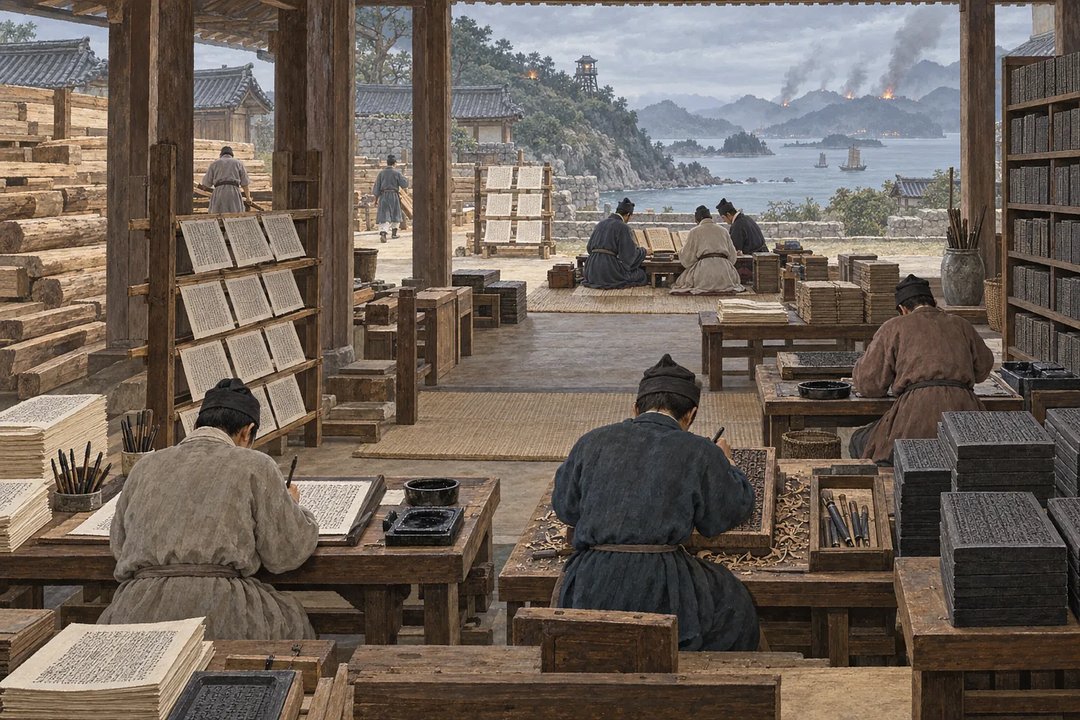
For the Tripitaka Koreana, 1237~1248 refers to carving the surviving woodblocks, while 1236~1251 refers to the wider production project. If you are comparing timelines, the 1251 completion ceremony does not mean carving continued until that year.
Why the scriptures were carved again
Goryeo, the Korean state that produced the collection, lost its First Tripitaka woodblocks during the Mongol invasions in 1232. That earlier collection had been commissioned in response to the Khitan invasion. Separating these events helps you understand why a second collection was needed.
The replacement involved more than copying. Sugi and other correctors compared Goryeo, Song and Khitan editions to resolve differences. The resulting wooden printing plates allowed the corrected Buddhist texts to be printed repeatedly on paper.
Reading the Tripitaka Koreana timeline
In the original article on Injoys, you will find a timeline linking each date to its source and tables separating carving, project milestones and heritage recognition. These distinctions make it easier to understand apparently conflicting accounts.
Read the full article on Injoys
A checklist for interpreting a historical summary
When checking a summary, you can use these distinctions:
- Dates: 1237~1248 covers carving according to the National Heritage Portal; 1251 marks the completion ceremony.
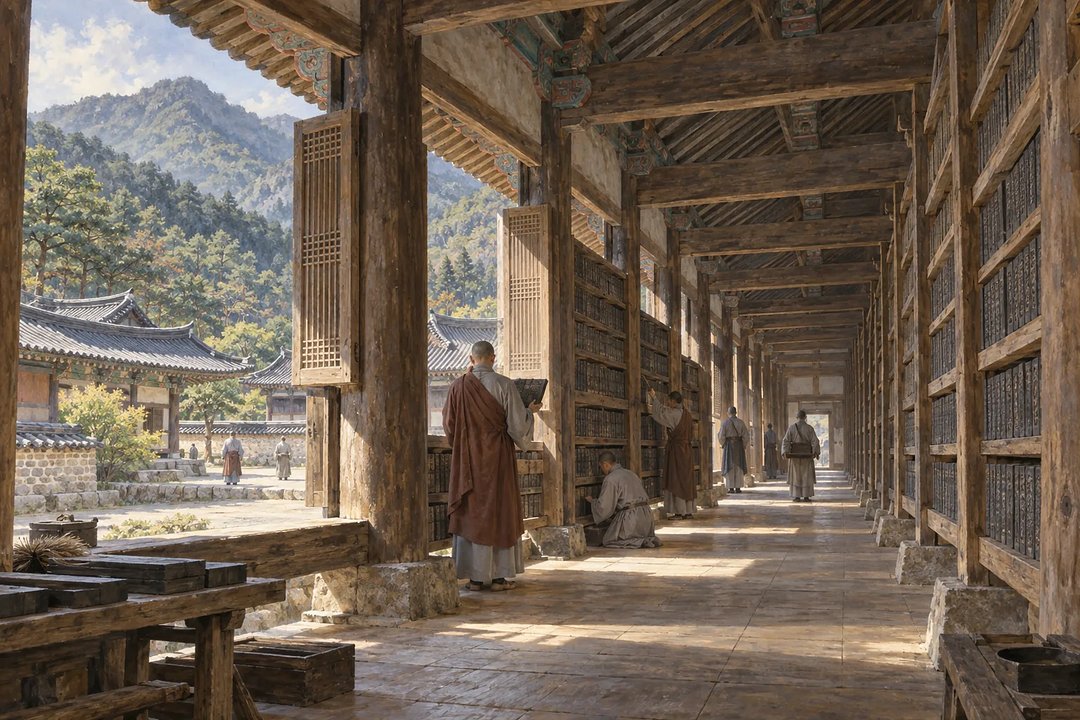
- Objects: the 81,258 woodblocks preserved at Haeinsa are printing plates, not a count of book volumes or scripture types.
- Recognition: Janggyeong Panjeon, the buildings housing the blocks, received World Heritage inscription in 1995. The Tripitaka Koreana and miscellaneous woodblocks entered the Memory of the World Register in 2007.
Where the evidence needs careful reading
If you need an exact project start date or carving location, keep the source distinctions in view. The project is widely dated from 1236, but an interpretation places preparations in 1233. Ganghwado and Namhae are identified as main production bases; precise institutional and carving locations remain debated.
High textual accuracy also does not establish that every character is error-free or that the collection includes every Buddhist text.
You can compare the dated events and their cited records in the original article on Injoys.
Read the full article on Injoys
This post was written with assistance and published on a channel run by Injoys (injoys.com). The original article and its sources are at the link above.


Comments
Post a Comment