Typhoon Window Securing Before Strong Winds: Key Checks

Does an X of tape mean your windows are ready for a typhoon? It cannot be relied on to prevent glass breakage. Start by checking gaps and movement in the window system, and complete reinforcement and outdoor clearing before strong winds begin.
Check the connections that support the glass
The frame is the outer structure fixed in the wall; the sash is the part that opens and closes. Check sash movement separately from gaps around the glass edges so you can identify where support is failing. Temporary tape at connections cannot replace repairs.
Safety film helps hold broken fragments together but does not guarantee the window's wind resistance. Wet newspaper has insufficient evidence of comparable fragment retention. Avoid repeatedly approaching windows to rewet it during strong winds; staying away reduces exposure to breaking glass.
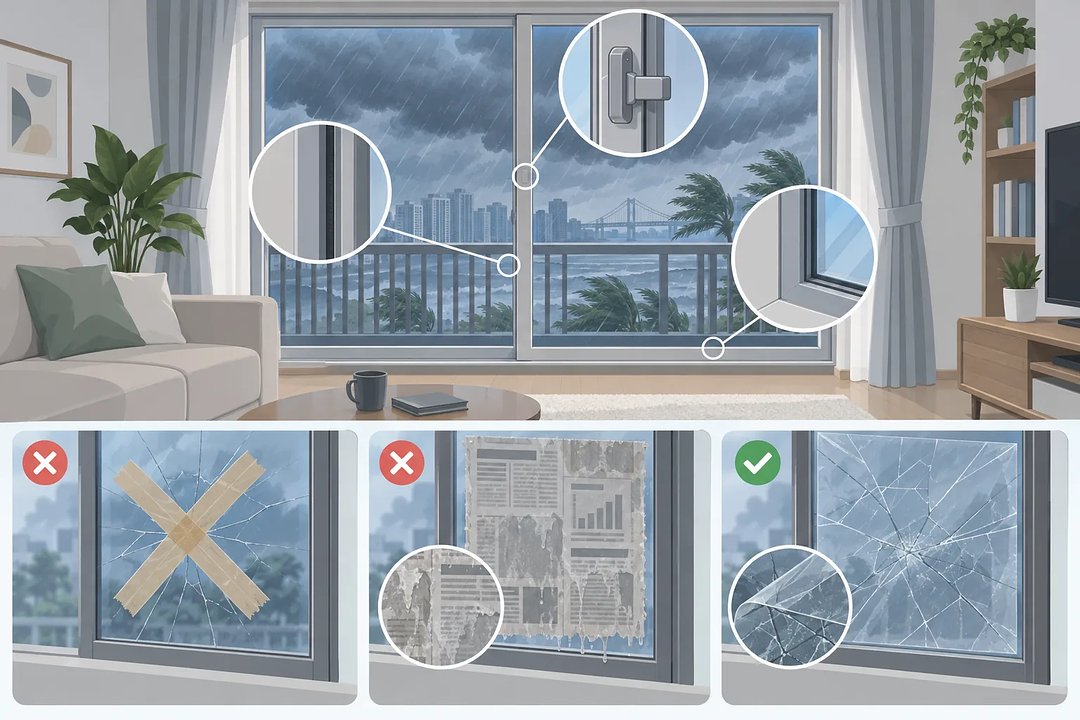
Typhoon window securing guidance to use
In the original article on Injoys, you will find an inspection sequence, a comparison of protective measures, and guidance matched to window condition. These distinctions help separate temporary reinforcement from problems requiring professional repair.
Read the full article on Injoys
A locked window still needs a wider check
Suppose your window locks and already has safety film, but the entire frame moves. The working lock and film do not resolve that movement: arrange a professional inspection when it is safe. Use this short check to keep those functions separate:
- A working lock helps keep the sash closed; it does not establish that the whole frame is secure.
- Film retains fragments; it does not strengthen the frame or locking mechanism.
- Temporary tape does not turn a damaged window into a completed repair.
Match the next step to conditions
Before strong winds, check locks and clear objects that could become airborne. For cracked glass or damaged frames, arrange professional repairs when safe. Securing methods depend on construction and condition, so check instructions from the window manufacturer or building management.
If strong winds have begun, stay away from windows and move to an interior area without a flooding risk. If a local evacuation order applies, follow it.
For your next step, check those manufacturer or building-management instructions before planning reinforcement. Once winds intensify, prioritize shelter over further window work.
Read the full article on Injoys
This post was written with assistance and published on a channel run by Injoys (injoys.com). The original article and its sources are at the link above.


Comments
Post a Comment