Battle of Bongodong 1920 Joint Victory Explained
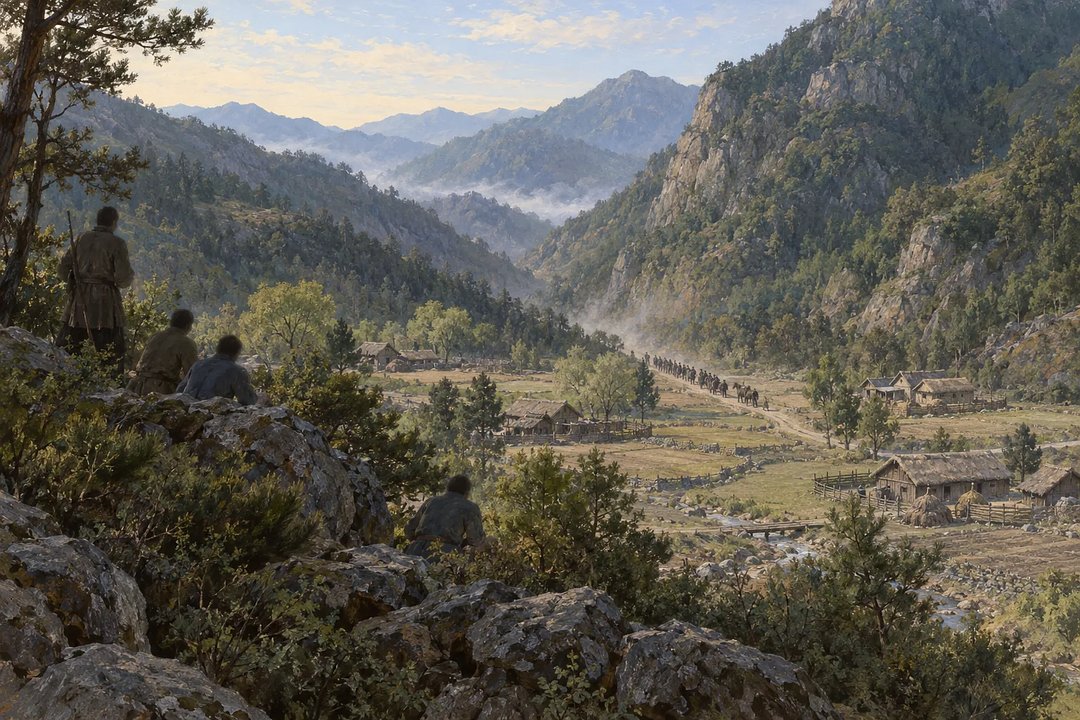
The Battle of Bongodong ended in victory for allied Korean independence forces, but reported casualty figures are not confirmed totals. If you are checking when it happened, the main fighting is commonly dated to June 7, 1920, in Northern Gando, north of the Tumen River.
How the allied attack worked
Consider more than a single commander's name to understand the operation. Several independence units coordinated their roles. Lee Hwa-il's small unit drew Japanese troops toward Bongodong, where other forces waited on higher ground. Once the main Japanese force entered the ambush area, concentrated fire followed. The Japanese troops retreated.
The victory did not end preparations for further fighting. The independence forces treated the wounded and regrouped; a meeting on June 21, 1920, discussed provisions and weapons.
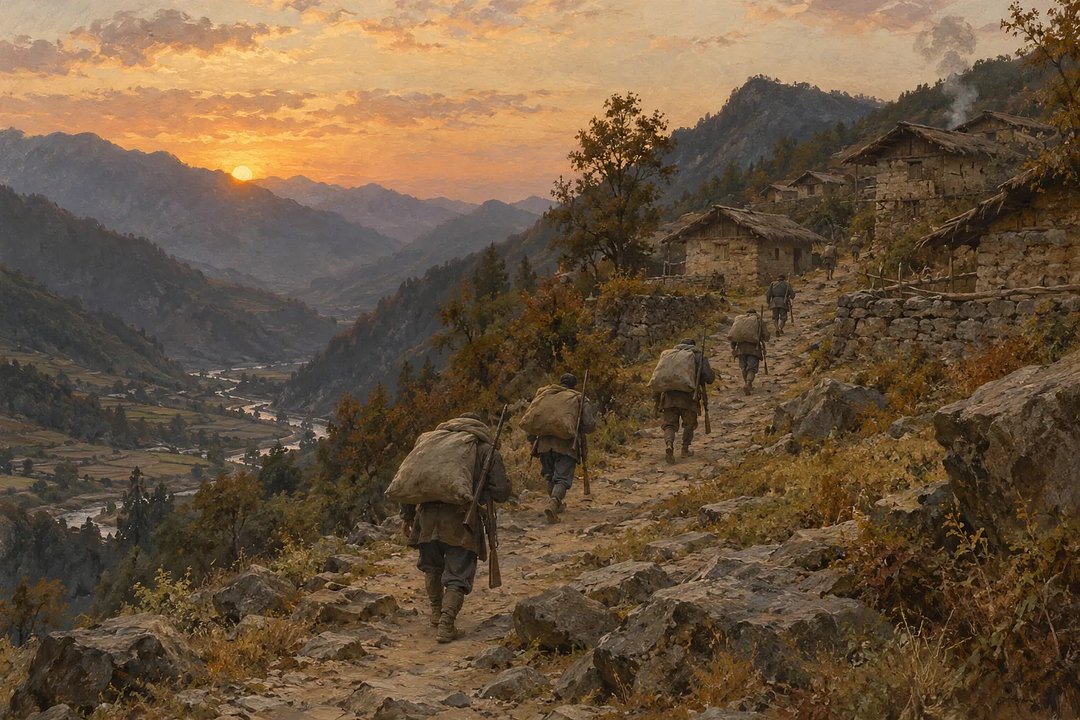 Figures carrying sacks and rifles up a rocky path beside a mountain hamlet at sunset
What the Bongodong account helps clarify
In the original article on Injoys, you can compare a dated timeline, a table of commanders' roles and a simplified diagram of the ambush positions. Its separation of reported losses from confirmed facts helps explain both the victory and the limits of the evidence.
Read the full article on Injoys
A quick check before citing a number
If you plan to use a casualty figure in a summary, consider keeping its source attached:
- The Korean battle report recorded 157 Japanese troops killed.
- The Japanese report cited by the Independence Hall of Korea recorded 1 Japanese soldier killed.
- Neither reported number establishes the actual total.
A careful summary can describe the Japanese retreat and the independence forces' victory without choosing either count as settled fact.
Keep the place and period in view
For a timeline of Korea's independence movement, consider placing this battle within the armed activity in Manchuria following the March 1st Movement in 1919. Consider keeping Bongodong separate from the fighting around Cheongsanri in October 1920. Also consider distinguishing the total size of an organization from the troops actually engaged; the account gives no definitive strength ratio.
Questions about conflicting records
Why does the battle report give July 7?
The records reviewed do not establish why that date appears. The report's July 7 entry must remain distinct from the commonly accepted June 7 date.
Can the film's dialogue be treated as historical speech?
No. The 2019 film is a dramatization, and attributing its dialogue to historical figures requires checking separate historical sources.
Check the evidence behind a quotation
Before citing a commander's words or a casualty count, consider consulting the historical sources identified in the original article on Injoys.
Read the full article on Injoys
This post was written with assistance and published on a channel run by Injoys (injoys.com). The original article and its sources are at the link above.


Comments
Post a Comment