Battle of Cheoin Fortress 1232 Results Explained
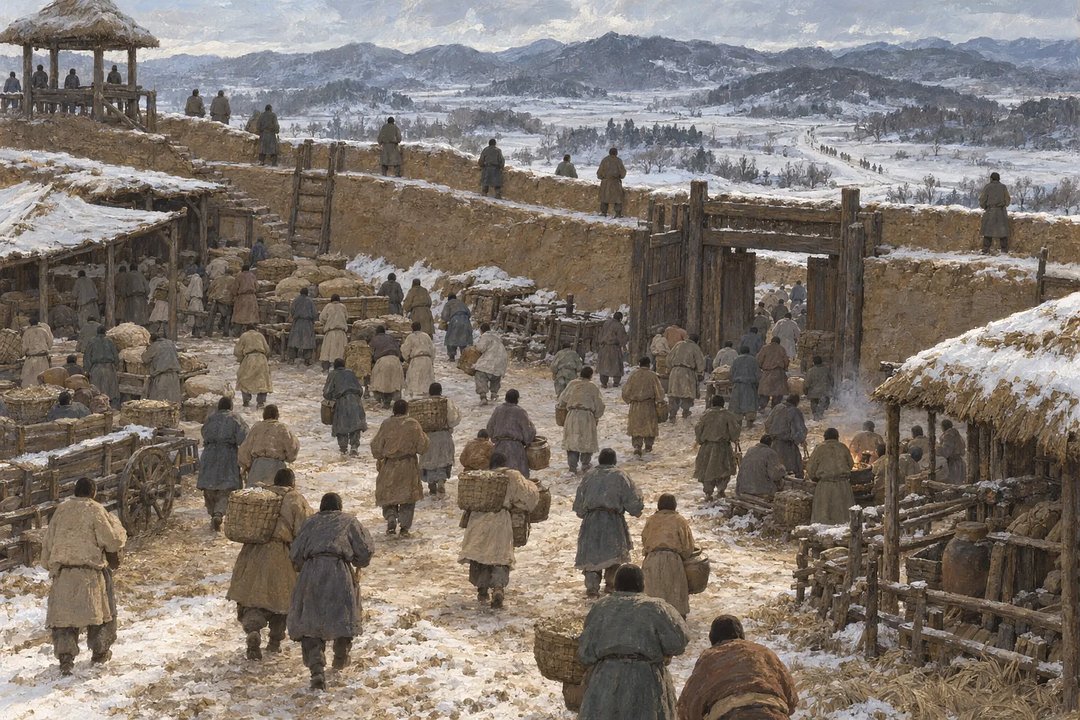
The Battle of Cheoin Fortress in 1232 ended the second Mongol invasion, but the wider war continued. If you are checking what the victory achieved, distinguish the Mongol withdrawal after commander Salitai’s death from lasting peace: another invasion began in 1235.
What the residents’ defense achieved
Residents of Cheoin-bugok gathered inside the fortress for refuge and resisted the attack. A bugok was a district administered separately from ordinary counties and districts, with less favorable treatment for its residents. Their resistance helped bring about a withdrawal affecting the invading force beyond the fortress.
The key distinction is between that collective achievement and the disputed identity of the archer. The Goryeosa says Kim Yun-hu shot Salitai, yet also records his statement that he lacked a bow and arrows. Neither part should be omitted.
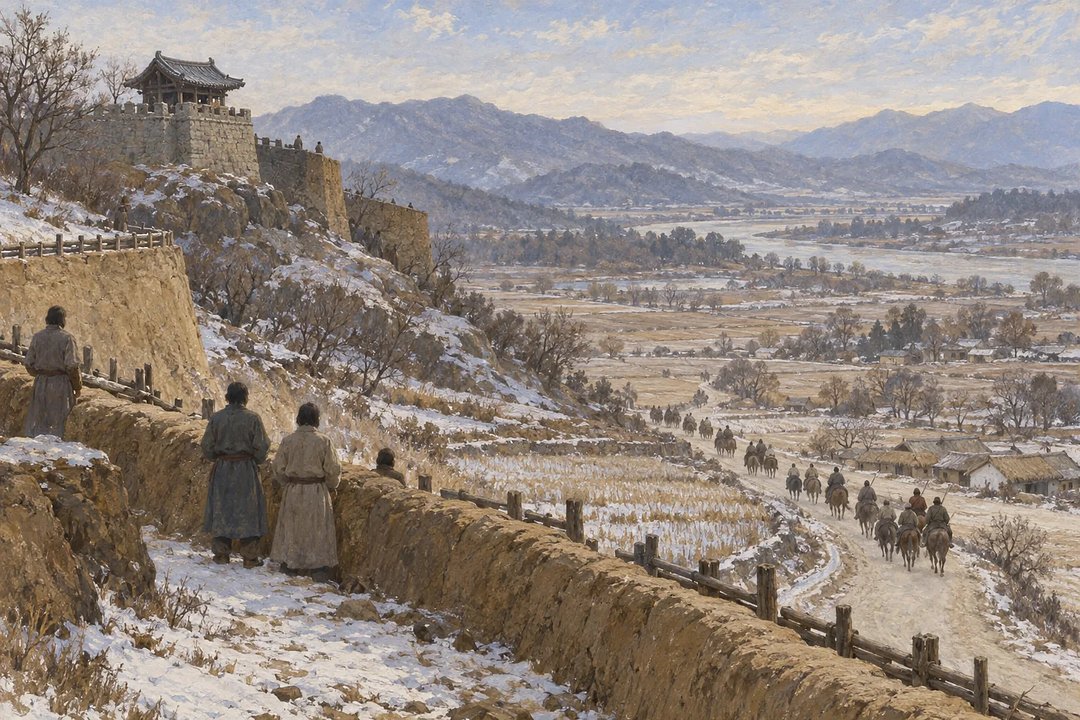 Residents by the snowy walls of Cheoin Fortress watch mounted troops ride away along a winding road.
Reading the Cheoin Fortress records
The original article on Injoys gives you a lunar-calendar timeline and comparisons of historical accounts, making it easier to separate recorded events from interpretations. Its discussion of Kim Yun-hu’s biography explains why a confident claim about who fired the arrow goes beyond what the conflicting passages establish.
Read the full article on Injoys
A practical check for a history summary
When preparing a short account, you can sort the claims by how firmly they are supported:
- Keep: residents resisted, Salitai died, and Mongol forces withdrew.
- Qualify: whether Kim Yun-hu personally fired the fatal arrow.
- Leave unspecified: troop numbers and the exact firing position, which the surviving records cannot firmly establish.
Check first when tracing county status
If you are researching Cheoin’s administrative history, avoid treating county status as an immediate, confirmed reward for the victory. Our History Net leaves the promotion date unresolved and presents the reward connection as a possibility.
The Digital Yongin Cultural Encyclopedia gives 1397 for the promotion. The Annals of King Sejong separately records an official’s appointment in King Taejo’s sixth year. Those claims need separate examination.
Questions about the people involved
Was Kim Yun-hu already a general?
No. The Goryeosa introduces him as a monk at Baekhyeonwon. He later served as a military officer after his contribution was recognized.
Do Salitai and Saryetap mean different commanders?
No. In accounts of this battle, both names identify the same Mongol commander.
Start with the biography
For a closer check, you can follow the reference to Kim Yun-hu’s biography in volume 103 of the Goryeosa in the original article on Injoys. Read the shooting account alongside his refusal of the reward.
Read the full article on Injoys
This post was written with assistance and published on a channel run by Injoys (injoys.com). The original article and its sources are at the link above.


Comments
Post a Comment