Busan's Wartime Capital: 1023 Days of History
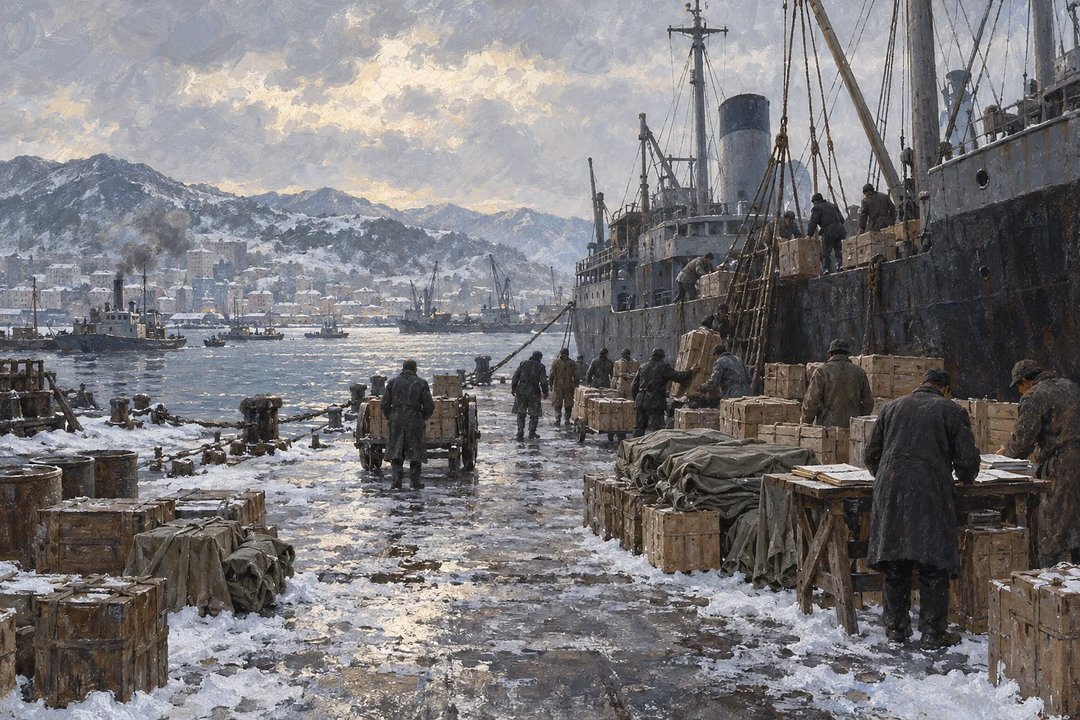
Busan's 1023 days as a wartime capital were not continuous. If you are trying to place the city in Korean War history, start with two separate periods, beginning on August 18, 1950, with a return to Seoul between them. The official description uses 1023 days, but the precise calculation remains disputed.
How administration and daily life continued
The connection between government offices, the port and refugee shelter helps explain Busan's role. Existing administrative buildings kept ministries working, while the port received troops and relief supplies from abroad. Relief involved shelter, food, transport and public health.
Education continued in tent schools. In Ami-dong, refugees used cemetery structures for shelter; in Uam-dong, cattle sheds were divided into living spaces. These places show how daily needs were met under housing shortages, rather than through a single government housing scheme.
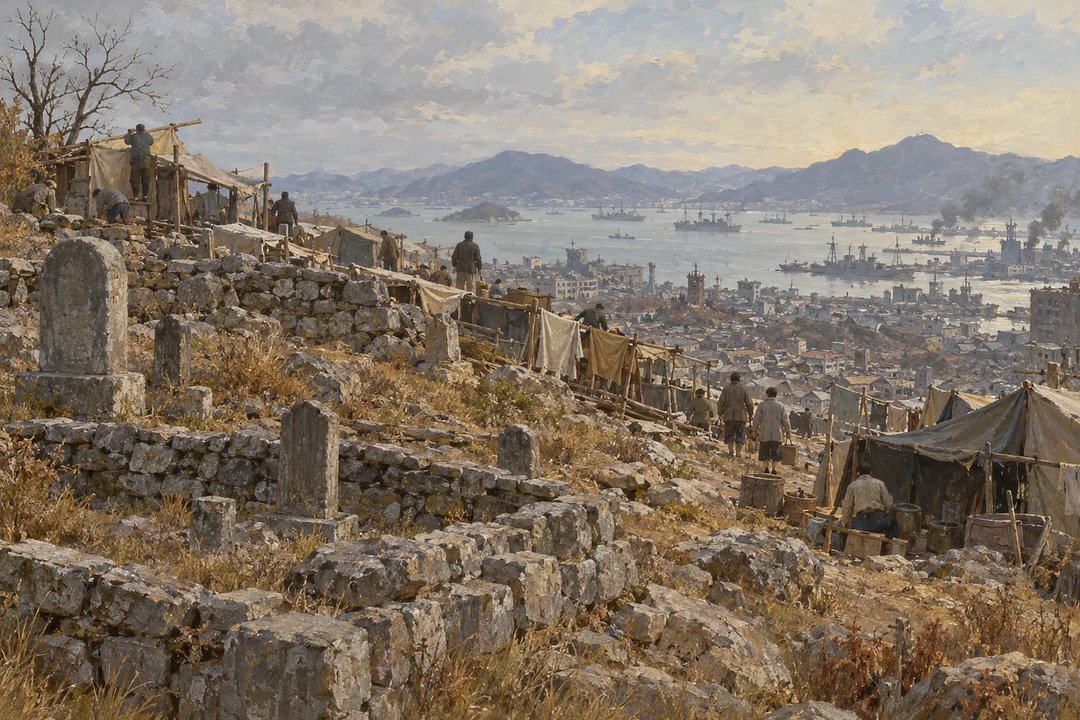 People build timber-and-canvas shelters among gravestones on a hillside above Busan harbor.
What the records help explain
In the original article on Injoys, you will find a dated timeline, a breakdown of ministries' relief duties and a comparison of what different supply records can establish. Its distinction between planned aid and recorded arrivals helps keep claims about refugee support within the evidence.
Read the full article on Injoys
A practical check on the aid figures
When reading a relief total, you can separate expectation, arrival and receipt. The December 14, 1950 table listed 1,050 tents expected and 50 already arrived. Those figures do not establish how many people were sheltered or what each household received.
Before treating either number as aid delivered to families, look for separate records of supplies issued and facilities operating. The nationwide totals also cannot all be attributed to Busan Port Pier 1.
Reading Busan's heritage status carefully
If you are researching World Heritage recognition, distinguish a tentative listing from final inscription. The original article on Injoys says official materials checked in October 2026 described the heritage as still seeking inscription. Check the UNESCO Tentative List description cited there for the stated periods and context. (verified value 1,023 combined days over August 18–October 26, 1950, and January 4, 1951–August 14, 1953. · source whc.unesco.org · checked 2023-05-16)
Which places survived and served which roles?
Was the government building also the president's residence?
No. Ministries used the former Gyeongsangnam-do Provincial Government building. Gyeongmudae was the president's residence and office.
Did refugee housing vanish after the war?
No, some remained. Ami-dong and Uam-dong continued as residential areas, with buildings and living spaces changing afterward.
For a next step, compare the two capital periods in the timeline in the original article on Injoys, keeping the official 1023-day label separate from the debate over its calculation.
Read the full article on Injoys
This post was written with assistance and published on a channel run by Injoys (injoys.com). The original article and its sources are at the link above.


Comments
Post a Comment