Cervantes' Algiers Captivity and Release Timeline
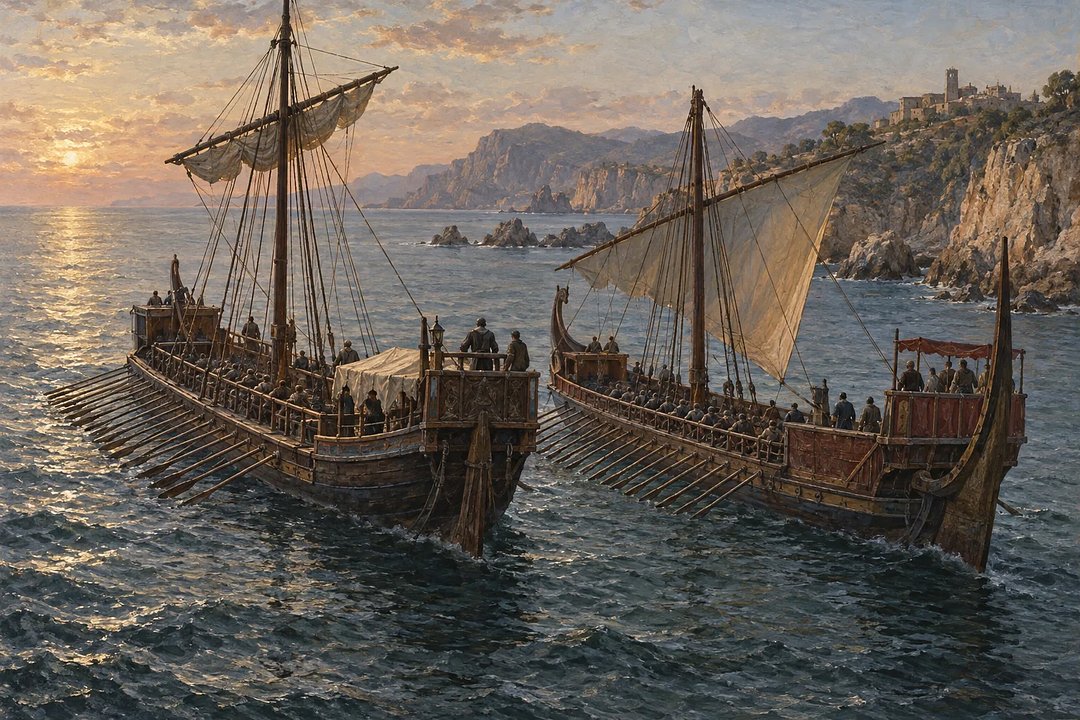
If you are tracing Cervantes's return to Spain, September 19, 1580, marks his release in Algiers, not his departure. Captured on September 26, 1575, while sailing home, he spent about five years in captivity. All four escape attempts failed; family fundraising and a ransom paid by the Trinitarian Order secured his freedom.
Separate freedom from the journey home
Keep two dates distinct: the ransom secured his release on September 19, 1580, and he sailed for the Spanish coast on October 24, 1580. Between those events, he prepared testimony about his conduct during captivity.
This distinction keeps the sequence clear. Algiers was a North African port connected to the Ottoman Empire, where captives could be enslaved or held for ransom. Treating this as modern criminal imprisonment would misrepresent his situation.
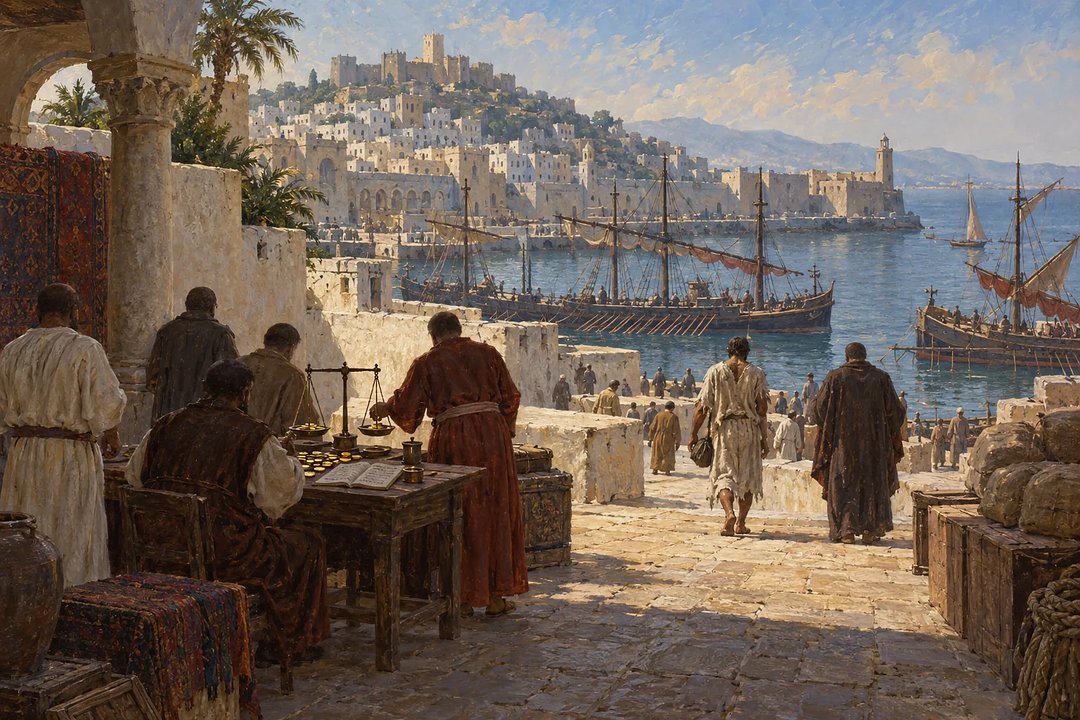 Gold coins are weighed in a courtyard overlooking Algiers harbor as a man walks toward the ships.
Read Cervantes's story against the records
In the original article on Injoys, you can follow a dated timeline, compare the four failed escape plans, and examine the ransom breakdown. Its useful distinction between payment records, witness testimony and literature helps explain which claims each source can support.
Read the full article on Injoys
A quick check for the ransom arithmetic
When checking a summary, you can use this calculation: 280 escudos in the ransom fund plus 220 escudos raised among merchants accounted for the 500 gold escudos paid in 1580. These portions explain the total; they are not extra charges.
Do not add the family's contribution again as a separate cost. Keep escudos and ducats distinct, too, rather than combining different currency units.
Where the biography helps with reading
If you are reading Don Quixote, use the captivity as historical context. A character's experiences cannot establish what happened to the author, and the whole novel cannot be explained as a direct result of his captivity.
For the escape attempts, remember that much of the detail comes from testimony gathered after his release to support his account. That purpose limits how confidently conversations or his state of mind can be reconstructed.
What about his family and poetry?
When was Rodrigo de Cervantes freed?
His younger brother Rodrigo was released in 1577 through the Mercedarian Order's efforts. Cervantes remained captive in Algiers until 1580.
What is the Epistle to Mateo Vázquez?
It is a verse epistle associated with his captivity in 1577 by the Spanish National Library, known as BNE. Read it as literary expression, rather than as a diary or administrative record.
For a next step, compare the release and departure entries in the timeline in the original article on Injoys.
Read the full article on Injoys
This post was written with assistance and published on a channel run by Injoys (injoys.com). The original article and its sources are at the link above.


Comments
Post a Comment