China's EAST 1.65x Density Guide
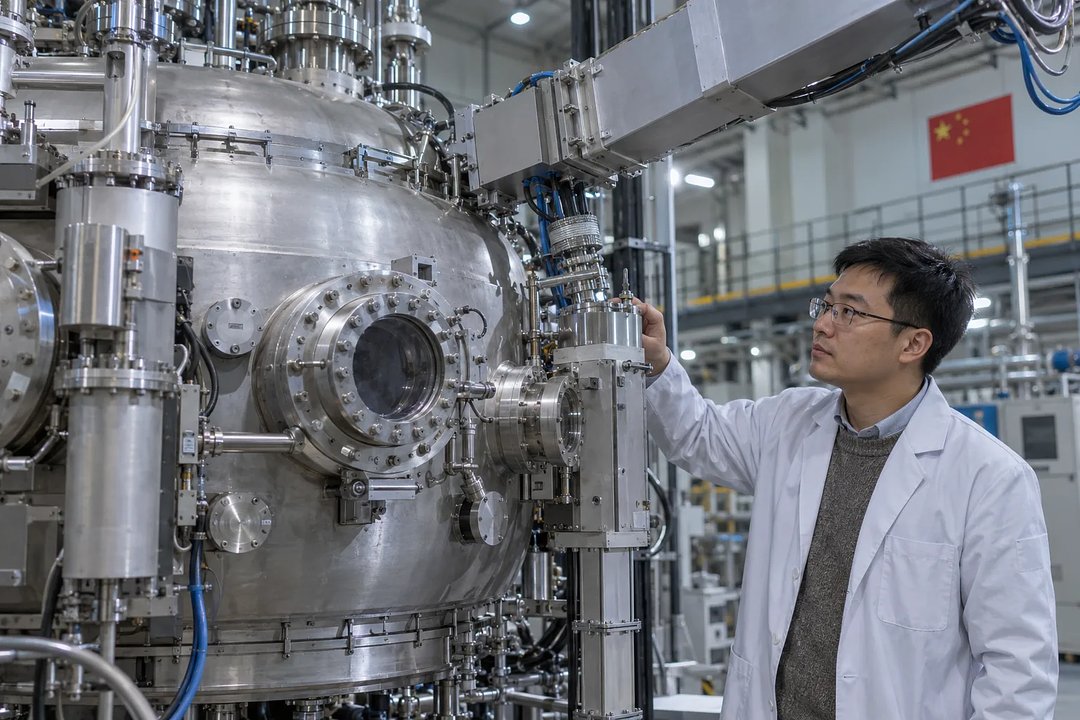
If you read EAST's 1.65 times density figure as an electricity result, that interpretation goes beyond the evidence. The study published in January 2026 reported electron density 1.3 to 1.65 times the Greenwald limit. It did not demonstrate commercial power generation.
What the density result actually measures
EAST is a superconducting tokamak, a research device that confines plasma with magnetic fields in a doughnut-shaped space. Plasma contains separated electrons and ions. The informal name artificial sun refers to fusion research.
The key distinction is what was measured: electron density averaged along a measurement path. The Greenwald limit is an experimental benchmark, not a universal ceiling. Reaching 1.65 times that reference means density was 65% higher, not that electricity output rose by that amount.
 A technician in safety glasses inspects a large spool of fine metal wire in a factory.
Read the EAST evidence in context
In the original article on Injoys, you can compare density, energy confinement and net power in explanatory tables. Its explanations of startup gas conditions, microwave electron heating and plasma-wall interactions help clarify what changed in the experiment.
Read the full article on Injoys
A quick check for power claims
When assessing a headline, you can use this short check before treating a plasma result as progress toward an electricity supply:
- Identify the measurement: density describes particles, not electricity delivered.
- Check the comparison: the reference is the Greenwald benchmark under the operating conditions, not EAST's previous record.
- Look for a whole-plant energy balance: net power subtracts the electricity consumed by the plant.
Keep the result within its research scope
If you are looking for a commercialization date, this paper cannot provide one. At the January 2026 announcement, researchers planned to apply the approach to high-confinement operation. Net electricity generation, fuel self-sufficiency and long-term operating performance still require verification.
Common questions
Was EAST the first experiment above the Greenwald limit?
No. Earlier experiments exceeded the benchmark. In 2024, the U.S. DIII-D reported high density together with strong energy confinement.
Is fusion free of radioactive waste?
No. Neutrons can make structural materials radioactive, and tritium also needs management. Waste characteristics depend on the materials and design.
For a closer check, you can start with the EAST paper abstract referenced in the original article on Injoys and compare its stated experimental scope with the claim being assessed.
Read the full article on Injoys
This post was written with assistance and published on a channel run by Injoys (injoys.com). The original article and its sources are at the link above.


Comments
Post a Comment