Elementary School Allowance: First-Time Payment Guide
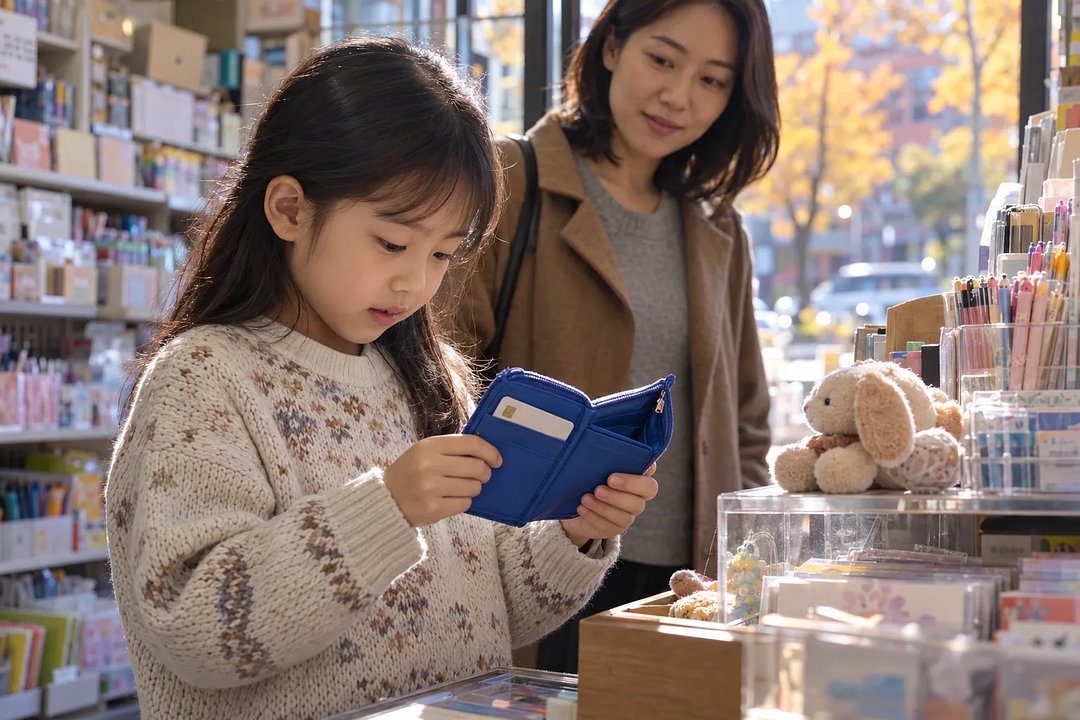
This content applies specifically to South Korea.
Start with cash if your child is managing an allowance for the first time, even in fifth grade. Consider a card when checking the remaining balance and planning the next purchase become familiar habits. Grade alone is not the deciding factor.
Choose a method that makes the balance clear
With cash, have your child count what remains after a purchase. A prepaid card uses money loaded beforehand; a debit card generally draws from a linked bank account. Either requires checking records and the money still available.
The practical test is whether the child can explain what remains and what it will cover next. Cash does not necessarily make every child save more; automatic card records can help when reviewed. Agreeing beforehand whether snacks and transit are included makes everyday spending expectations clearer.
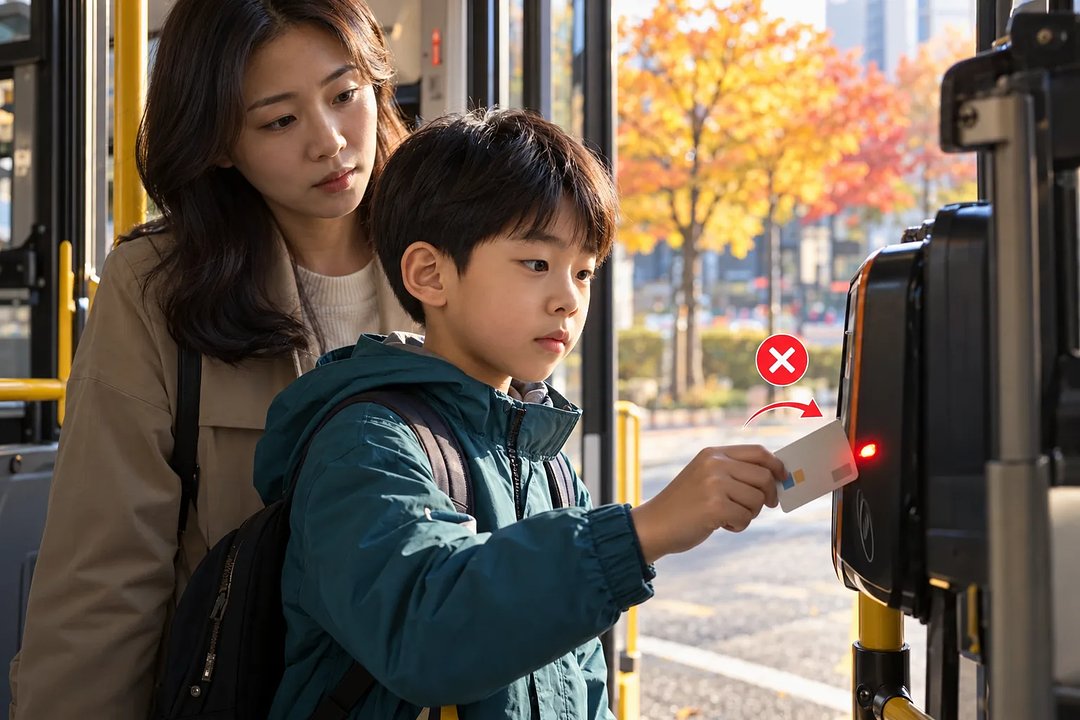 A boy holds a card to a bus fare reader glowing red while his mother looks on.
Find the comparison and practical steps
In the original article on Injoys, you can compare payment methods and follow steps for agreeing on spending rules. Its product-specific transit and lost-card guidance helps explain why a payment balance may not tell the whole story.
Read the full article on Injoys
Use a balance check before the next purchase
Try this short check with your child:
- Identify where the remaining money is held: cash, a loaded card balance or a linked account.
- Compare that balance with the price of the next planned purchase.
- Record a card top-up as a transfer, separate from a purchase.
Loading 1,500 won onto a card moves the money; spending 1,000 won afterward leaves 500 won. These are teaching figures, not a recommended allowance amount. Separating the two transactions avoids overstating spending.
Check allowance readiness and card eligibility separately
The Financial Services Commission guidance dated May 11, 2026 permits debit cards without postpaid transit for children aged at least 7. Cards with postpaid transit, where fares are paid later, are available from age 12.
Before applying, check the chosen issuer's product requirements, parental consent process and required documents. Being old enough does not establish readiness to manage the balance.
Other payment questions
Are KakaoBank mini and the Toss Youth Card debit cards?
No. KakaoBank mini is a prepaid electronic payment service, and the Toss Youth Card is a prepaid card linked to Toss Money.
Does sending money to a bank account weaken the lesson?
The transfer method alone does not determine its educational value. Have your child check the amount received and current balance, then review spending through the next allowance payment together.
As a next step, list the costs your child will pay and agree on a budget using those items' actual prices.
Read the full article on Injoys
This post was written with assistance and published on a channel run by Injoys (injoys.com). The original article and its sources are at the link above.


Comments
Post a Comment