Foreign Transaction Fees Abroad: Cost Comparison

If you are choosing between Korean won and the local currency at an overseas checkout, choose the local currency. This avoids the conversion cost of dynamic currency conversion, or DCC, though the card's own fees may still apply. Compare cash and cards by their total cost for the same local-currency amount to help keep payment costs within the travel budget.
Compare the amount actually paid
Look beyond a cashback rate or an exchange discount. Include the exchange rate and card fees, then check whether any waiver applies to the payment. For cash withdrawals, the local ATM operator may charge separately even when the card's withdrawal fee is waived.
Before buying foreign currency, check the cost of converting leftovers back to won. Travelog foreign currency Hana Money has a 1% refund fee, and its refund exchange rate also affects the amount received.
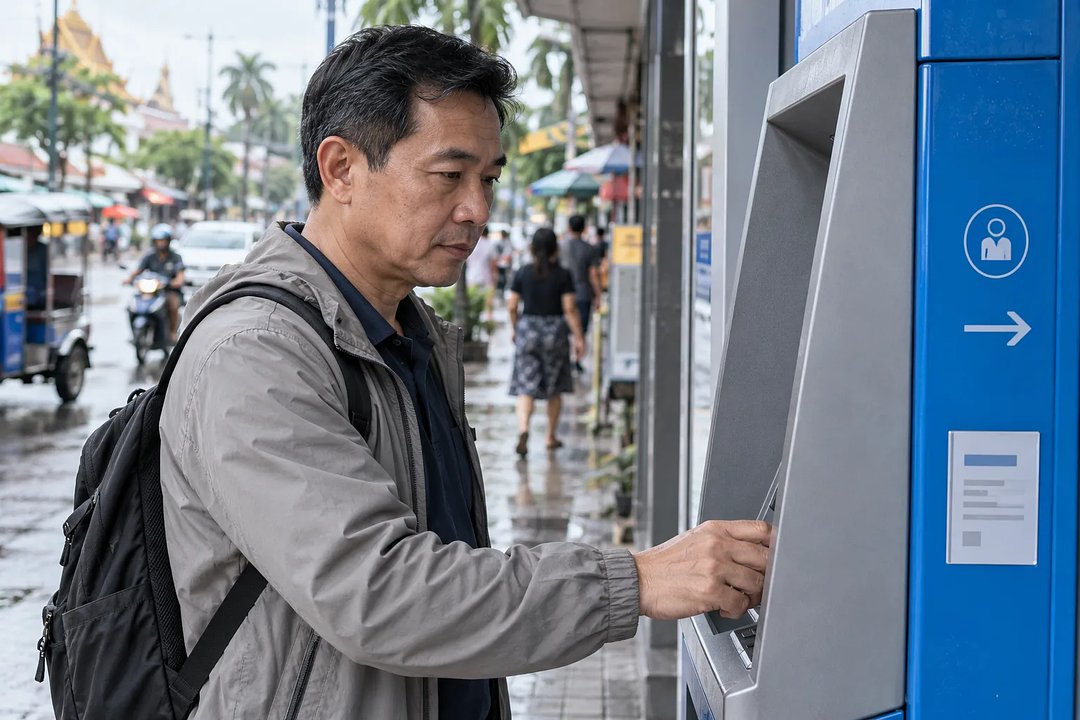 Middle-aged man in a gray jacket using a street ATM beside a wet sidewalk
Foreign transaction fees explained by payment method
The original article on Injoys is useful because it separates costs that can look like one fee. You will find comparison tables for cash, cards and ATMs, plus account requirements and refund checks to use before choosing a payment method.
Read the full article on Injoys
Match the plan to where payments happen
If you expect both card payments and cash-only stops, compare the two parts of the budget separately:
- For card spending, check the applied exchange rate and fees after any eligible waiver.
- For cash spending, compare buying currency before departure with withdrawing it locally, including operator fees and waiver limits.
Check refund terms before converting the entire budget in advance. Free exchange does not prevent gains or losses from exchange-rate changes.
Check the account required for the benefit
The won-based examples concern Korean payment products. For Toss Bank, the previous 2% overseas payment cashback was replaced by fee waivers from August 11, 2026. A foreign currency account must be linked for overseas payments to receive the waiver of the 1% international brand fee and USD 0.5 per transaction. Before relying on it, check the latest product information.
Will currency settings affect checkout?
Does blocking DCC stop overseas card use?
No. It blocks overseas payments processed in won, rather than all overseas card use. If a won transaction is declined, ask to pay again in the local currency.
Does a website price in won always mean DCC?
No. The displayed price may simply be a conversion. Check the final payment currency and conversion terms at checkout.
Before the next overseas purchase, look for the DCC blocking option in the card issuer's app and check its status for each card planned for use.
Read the full article on Injoys
This post was written with assistance and published on a channel run by Injoys (injoys.com). The original article and its sources are at the link above.


Comments
Post a Comment