Gyeongbu Expressway 1970 Completion Timeline
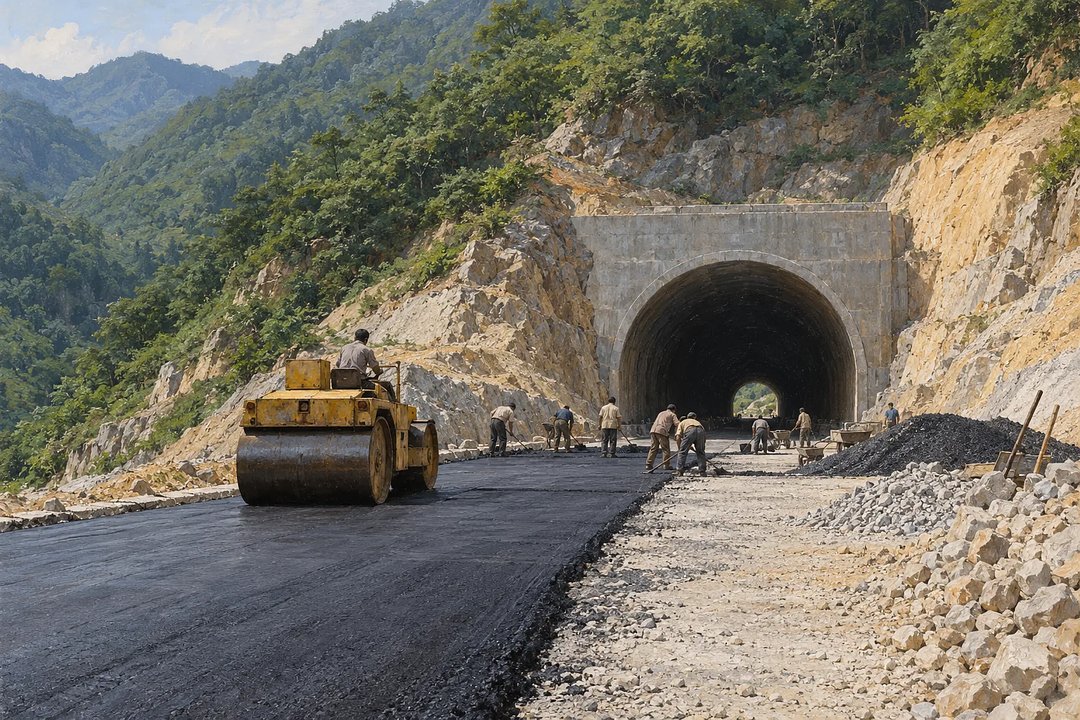
Completion and opening give you two different dates for the Gyeongbu Expressway: June 30, 1970, and July 7, 1970, respectively. The final Daejeon-Daegu section explains why finishing construction and admitting traffic belong separately on the timeline.
Why the final section took more work
Transport shortages had worsened from 1965 as economic growth and production outpaced transport capacity. Construction began on February 1, 1968, but the stretch between Daejeon and Daegu required bridges across the Geumgang River and tunnels through mountainous terrain.
The roadbed alone does not explain the final delay. Earthworks were finished by the end of 1969, while structures and paving continued into 1970. Paving at the approaches to Dangjae Tunnel finished on June 27, 1970, before completion of the whole route on June 30, 1970.
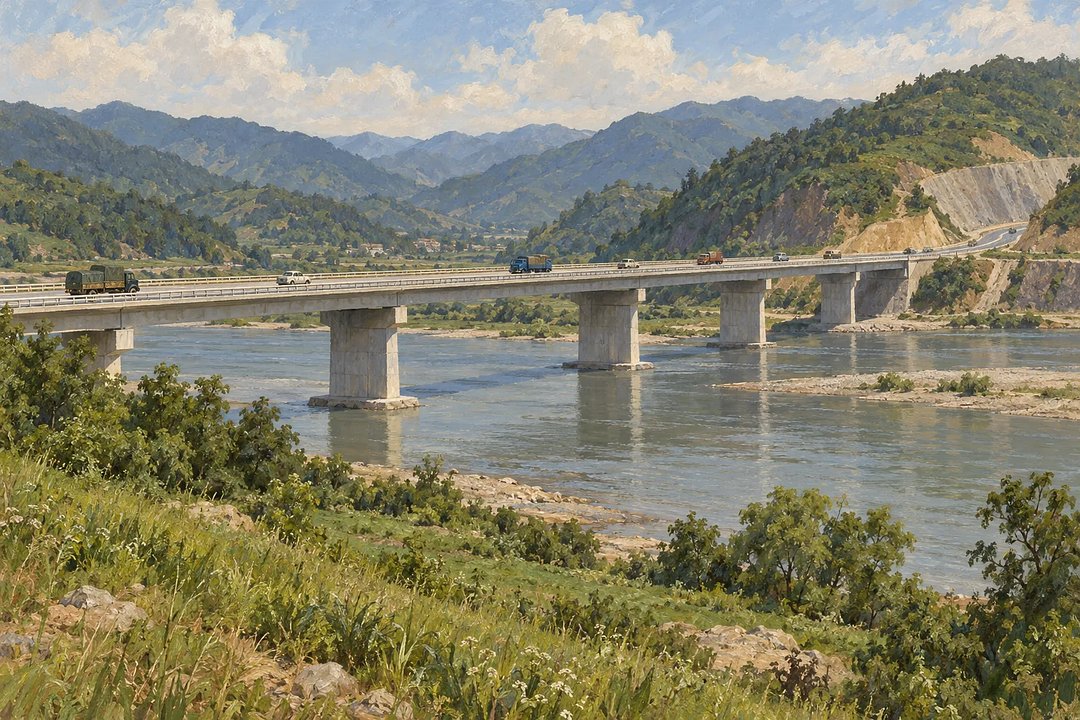 Painting of trucks and cars crossing a Gyeongbu Expressway bridge over the Geum River amid mountains
Reading the Gyeongbu records
In the original article on Injoys, you can follow a dated construction timeline and funding tables tied to historical records. It distinguishes between proposed financing and money actually used: domestic sources covered almost all construction costs, rather than the entire amount.
Read the full article on Injoys
A check before citing an economic claim
If you plan to cite the project’s effect on regional inequality, use this short check:
- Identify the speaker: Kim Won-gi was the vice minister of construction at the time.
- Label his prediction about reducing regional disparities as an expectation.
- Look for subsequent regional statistics and research before describing a measured result.
Keep the historical scale in context
The scope matters when comparing past and present. The 428km route with four lanes in total describes the project completed in 1970, not today’s road. Assessments of the later expressway network also include other routes, so its full effects cannot be assigned to this route alone.
Questions readers ask
Could drivers use any sections before 1970?
Yes. The Seoul-Suwon section admitted traffic on December 21, 1968, followed by the Daegu-Busan section on December 29, 1969. Individual sections became available before the entire route opened.
How many people died during construction?
The National Museum of Korean Contemporary History records 77 deaths during construction. A memorial tower near Geumgang Service Area honors those who died.
For a closer check of a date or claim, consult the timeline and the National Archives of Korea records identified in the original article on Injoys.
Read the full article on Injoys
This post was written with assistance and published on a channel run by Injoys (injoys.com). The original article and its sources are at the link above.


Comments
Post a Comment