Jang Bogo 828 Cheonghaejin Founding and Achievements
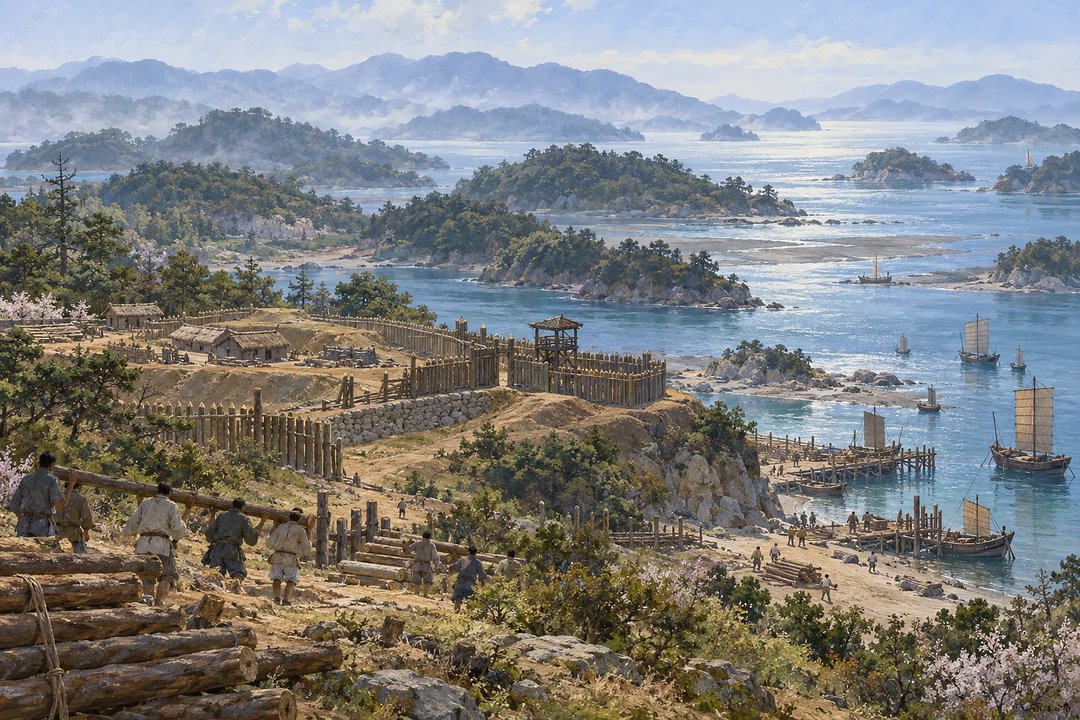
Jang Bogo established Cheonghaejin in 828, but his base at Wando does not establish his birthplace. If you are checking his life story, that distinction matters: his birth year and hometown remain unknown.
How a military base supported trade
Jang Bogo was a military officer and merchant of Silla, a kingdom in Korea. With King Heungdeok's permission, he established Cheonghaejin in present-day Wando to counter piracy and the capture and sale of Silla people.
For you, the useful connection is between protection and exchange. Piracy threatened merchant ships, coastal residents and grain shipments to the capital. The base supported sea routes, while Silla communities in Tang China helped connect trade with Japan.
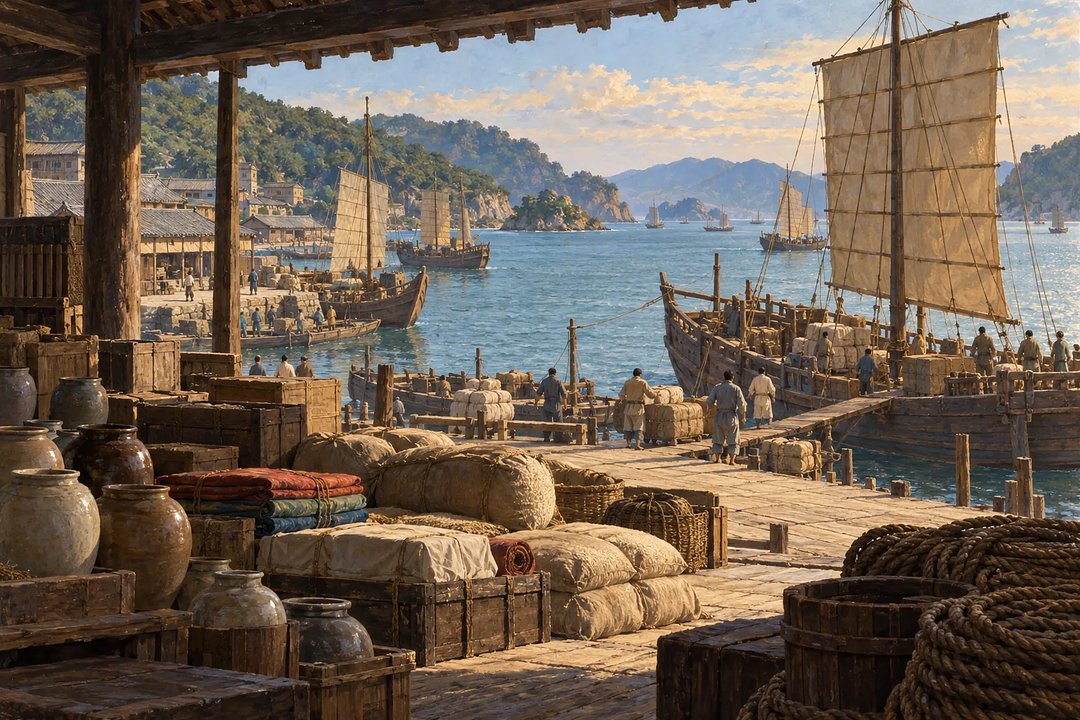 Jars, textiles, sacks and rope in a waterfront storehouse overlooking dockworkers and moored sailing ships
Read Cheonghaejin's timeline alongside its evidence
In the original article on Injoys, you will find a timeline pairing events with their sources and tables separating recorded claims from uncertain interpretations. This makes it easier to see which details support a summary and which need qualification.
Read the full article on Injoys
A practical check for historical claims
When comparing accounts, you can sort claims by what the evidence supports:
- Established event: the base's founding is dated to the 4th lunar month of 828.
- Unresolved detail: Wando's role as a base does not settle the birthplace question.
- Source relationship: repeated information may come from an earlier text rather than separate testimony.
The last check matters because the biography in the Samguk sagi, a historical work, draws extensively on Du Mu's writing. Several accounts need not mean several independent witnesses.
For readers building a ninth-century timeline
If you need a precise death date, identify the source being followed. The Samguk sagi places Jang Bogo's death in 846; some commentaries use 841 based on Japanese records. The base was abolished in 851, which did not end maritime trade by Silla people as a whole.
Troop numbers and traded goods
Were all 10,000 troops sent by the government?
That cannot be established. The Samguk sagi records 10,000 troops, while Our History Net interprets the figure as the maximum number he could command.
What goods did Jang Bogo trade?
Our History Net lists ceramics, silk and spices. The fleet's total trade volume and profits remain difficult to determine.
For a next step, compare the dated entries and their supporting records in the original article on Injoys before choosing a death date for notes or a timeline.
Read the full article on Injoys
This post was written with assistance and published on a channel run by Injoys (injoys.com). The original article and its sources are at the link above.


Comments
Post a Comment