June Democratic Struggle 1987: Amendment Timeline

The June 29, 1987 declaration promised direct presidential elections; it did not itself change the constitution. If you are tracing when the June Democratic Struggle secured constitutional change, the amendment was confirmed by referendum on October 27, 1987.
What the protests changed
The April 13, 1987 measure sought to keep an indirect election system, where a presidential electoral college chose the president. Citizens and opposition parties demanded a direct vote. Protests against state violence joined that demand, and expanding public participation led to acceptance of a constitutional amendment.
The key distinction is between winning a political commitment and completing the legal change. Keeping those stages separate makes the sequence easier to follow.
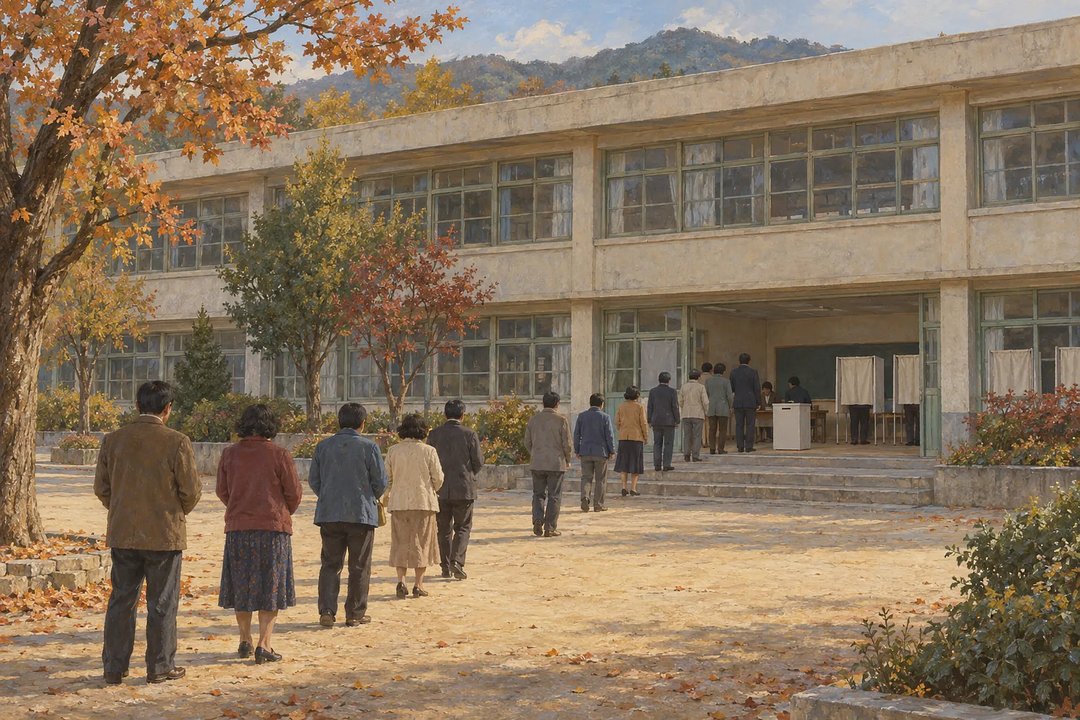 Voters queue across a school courtyard toward a polling room with voting booths and a ballot box.
June struggle records worth comparing
In the original article on Injoys, you can follow a dated timeline and compare the political declaration with the later constitutional steps. Its explanations of historical terms and references to archival records help clarify what each date represents.
Read the full article on Injoys
A check before writing a timeline entry
If you are preparing study notes, match each date to a precise verb:
- June 29, 1987: Roh Tae-woo promised acceptance of an amendment for direct elections.
- October 27, 1987: Voters approved the amendment in a referendum.
- October 29, 1987: The amended constitution was promulgated, meaning officially announced.
A single entry labelled constitutional change would hide these separate stages.
When to check the scope of a claim
Use this account if you are studying the nationwide 1987 movement and its constitutional outcome. When describing how protests were organized, distinguish coordinated action from spontaneous demonstrations: the National Movement Headquarters for a Democratic Constitution, known as Gukbon, did not direct every action.
What did the outcome mean?
Did 93.1% of eligible voters approve the amendment?
No. The 93.1% approval figure refers to those who voted in the referendum, rather than all eligible voters.
Why did the election come before the constitution took effect?
The amended constitution's supplementary provisions allowed an earlier presidential election. Voting took place on December 16, 1987; the constitution took effect on February 25, 1988.
Did direct elections immediately put the opposition in power?
No. Roh Tae-woo, the ruling party's candidate, won the 1987 presidential election.
Consider comparing the referendum record and the constitutional dates cited in the original article on Injoys before finalizing a timeline.
Read the full article on Injoys
This post was written with assistance and published on a channel run by Injoys (injoys.com). The original article and its sources are at the link above.


Comments
Post a Comment