Kimchi Refrigerator Settings for Low-Salt Storage
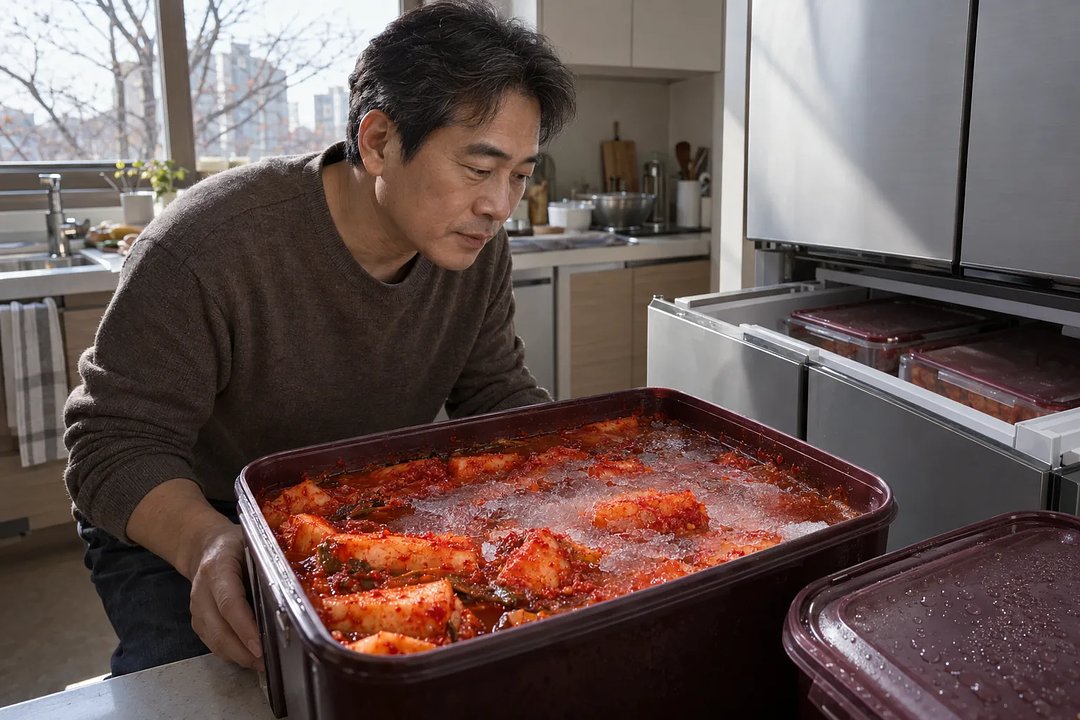
High means colder storage, not a promise that kimchi will keep longer. If you spot thin ice on kimchi, a fermented vegetable food, check the cooling level and container lid. For less salty kimchi, consider Low or a supported low-salt setting, following the exact conditions in the model’s manual.
Match cooling to salt content
Within the same storage mode, Strong or High keeps kimchi colder than Medium; Weak or Low keeps it less cold. Manufacturer guidance recommends Low for less salty kimchi and Medium for ordinary-salt whole-head kimchi. High may suit high-salt kimchi or salty aged kimchi.
Choose by actual salt content as well as the food’s name. This can help avoid freezing lightly salted kimchi intended for everyday meals. If thin ice appears, consider one weaker cooling level according to the manual, wipe moisture from the lid and check the seal.
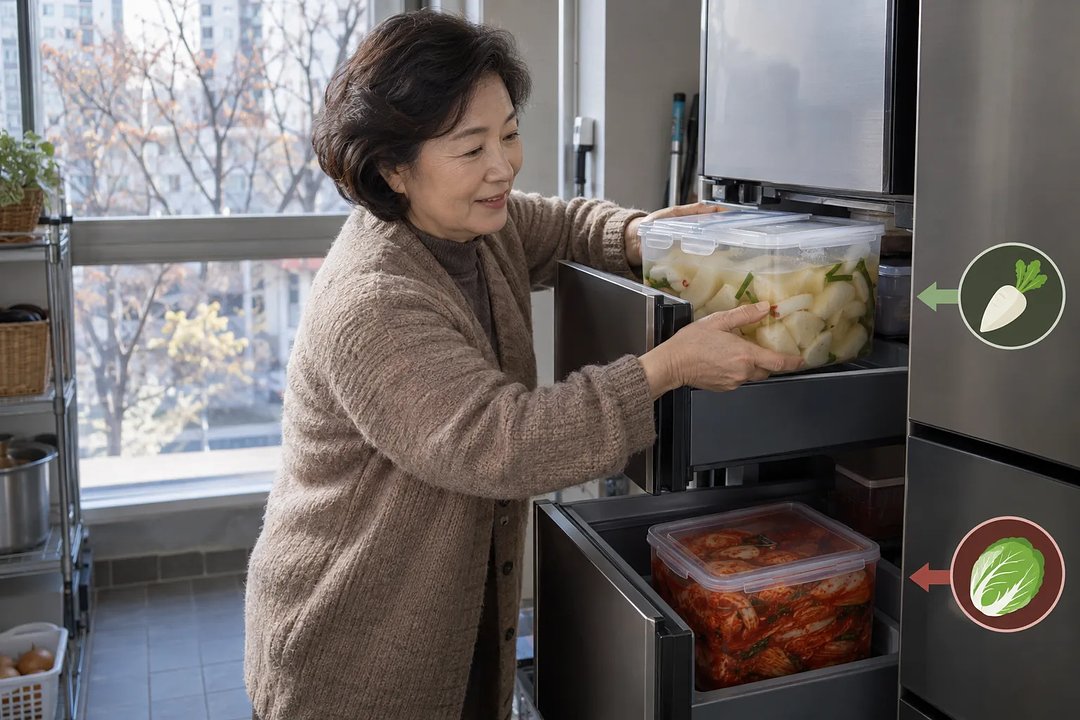 A woman places a tub of radish water kimchi in the upper drawer of a kimchi fridge; cabbage kimchi sits below.
Compare the guidance before changing a setting
In the original article on Injoys, you can compare tables covering kimchi types, cooling levels and shared compartments. Its steps for checking ice and finding manufacturer manuals help connect a visible problem with the next checks to make.
Read the full article on Injoys
Two cabbage kimchis may need different settings
Suppose you have ordinary-salt napa cabbage kimchi and a batch made with less salt. Medium is a typical recommendation for the ordinary-salt batch; check low-salt guidance for the other. Separate containers in one compartment still share one setting. If their requirements differ, consider independently adjustable compartments and confirm the modes each supports.
Kimchi refrigerator manual checks
This guidance depends on the model and the compartment in use. A dedicated low-salt mode is available only on supported products, and Low cannot be assumed suitable for every model. Check the full model number and compartment instructions before applying a temperature chart from elsewhere. If salt content is unknown, consult preparation information or the seller’s storage guidance.
What the modes actually do
Does low-salt mode remove salt from kimchi?
No. It provides storage conditions for kimchi already made with less salt; it does not change the food’s salt content.
Is ripening mode the same as storage mode?
No. Ripening mode supports fermentation, while storage mode keeps a temperature suited to storage. Check the manual for the intended kimchi and how to switch modes after ripening.
Find the instructions for the compartment
Start with the full model number on the product label, then find its manual through the manufacturer’s customer support section. If temperatures are not listed, ask the manufacturer to confirm them using the model number and compartment details.
Read the full article on Injoys
This post was written with assistance and published on a channel run by Injoys (injoys.com). The original article and its sources are at the link above.


Comments
Post a Comment