Kimjang Kimchi at 4°C or Below: Fridge Storage
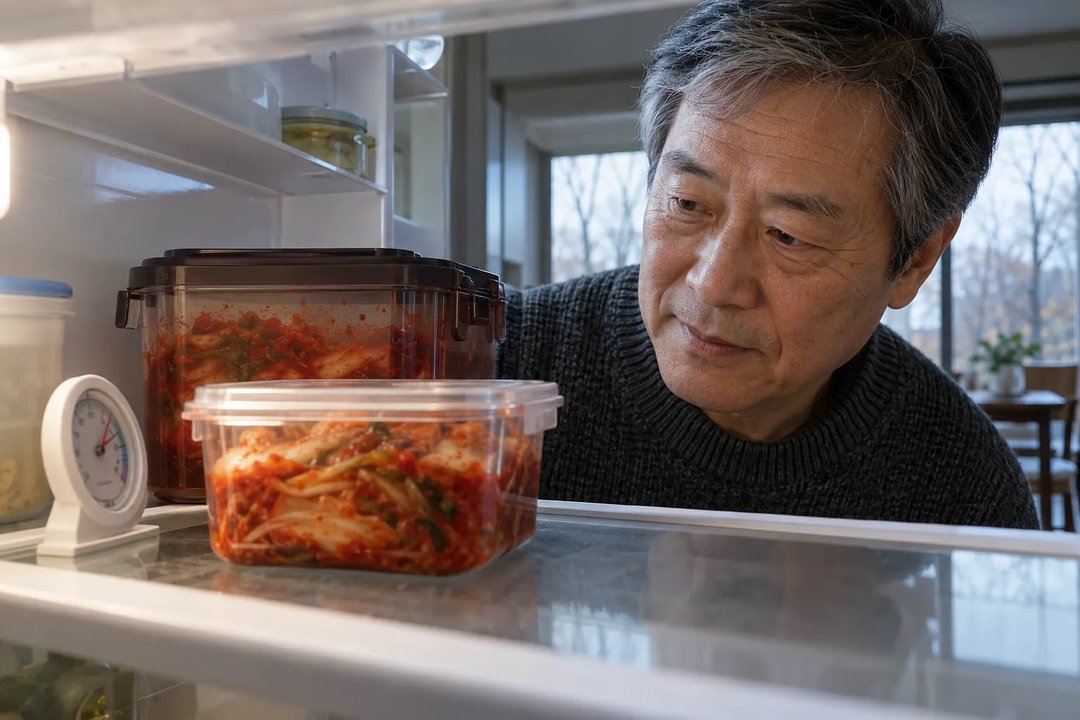
A dedicated kimchi refrigerator is not required: you can store kimjang kimchi in a regular fridge, keeping its actual storage temperature at 4°C or below to help prevent golmaji, a white yeast film. Kimjang is the practice of making and sharing kimchi for winter.
Check the temperature where the container sits
The fridge setting alone does not establish the temperature around the kimchi. Use a refrigerator thermometer and leave room for cold air to circulate. The 4°C-or-below guidance, issued on October 24, 2024, concerns preventing golmaji; it does not establish a safe storage period.
Separate a small serving portion from the kimchi reserved for later. At mealtimes, you can take out that portion while leaving the other container closed, reducing repeated handling and exposure to air.
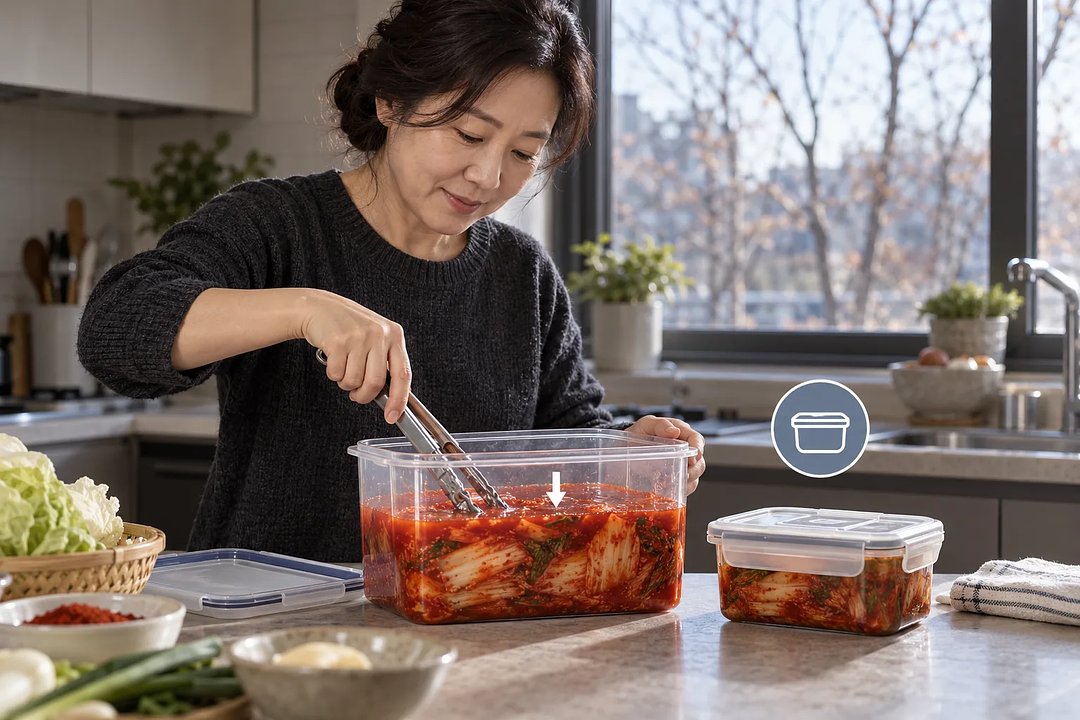 A woman presses napa kimchi into its brine with tongs in a clear tub beside a smaller sealed tub.
Kimjang kimchi storage details to compare
In the original article on Injoys, you will find container preparation steps and comparisons of regular and kimchi refrigerators. Its distinction between slowing fermentation and stopping it helps explain why refrigerated kimchi still changes in taste.
Read the full article on Injoys
A quick check before serving
Use this sequence when choosing which container to open:
- Check when it was made or purchased and when it was first opened to help identify which portion to eat first.
- Use a clean utensil, then return the remaining kimchi to the refrigerator promptly.
- Keep any kimchi served at the table separate from the stored batch.
These records help you track handling; they do not create a new use-by date.
Conditions that need a separate check
For purchased kimchi, follow the label's storage instructions first. Homemade kimchi has no single storage period: ingredients, salt content and temperature history all matter. If you have lightly salted kimchi, check the appliance manual for a suitable setting because excessive cooling can freeze it.
Other storage questions
Must kimchi ferment at room temperature first?
No, this step is not needed for all kimchi. For separate ripening, follow the temperature specified in the recipe or appliance instructions.
Should the container be filled to the brim?
No, fermentation can cause liquid to overflow. Follow the marked fill line, and take separate steps to limit surface contact with air.
Do bubbles mean kimchi has spoiled?
No, bubbles can also develop during normal fermentation. Bubbles alone cannot establish whether kimchi has spoiled.
Start with a thermometer reading
Check the actual temperature where the kimchi sits. For the surface-covering and container steps, you can consult the original article on Injoys.
Read the full article on Injoys
This post was written with assistance and published on a channel run by Injoys (injoys.com). The original article and its sources are at the link above.


Comments
Post a Comment