Pa Kimchi Recipe 500g Without Pre-Salting
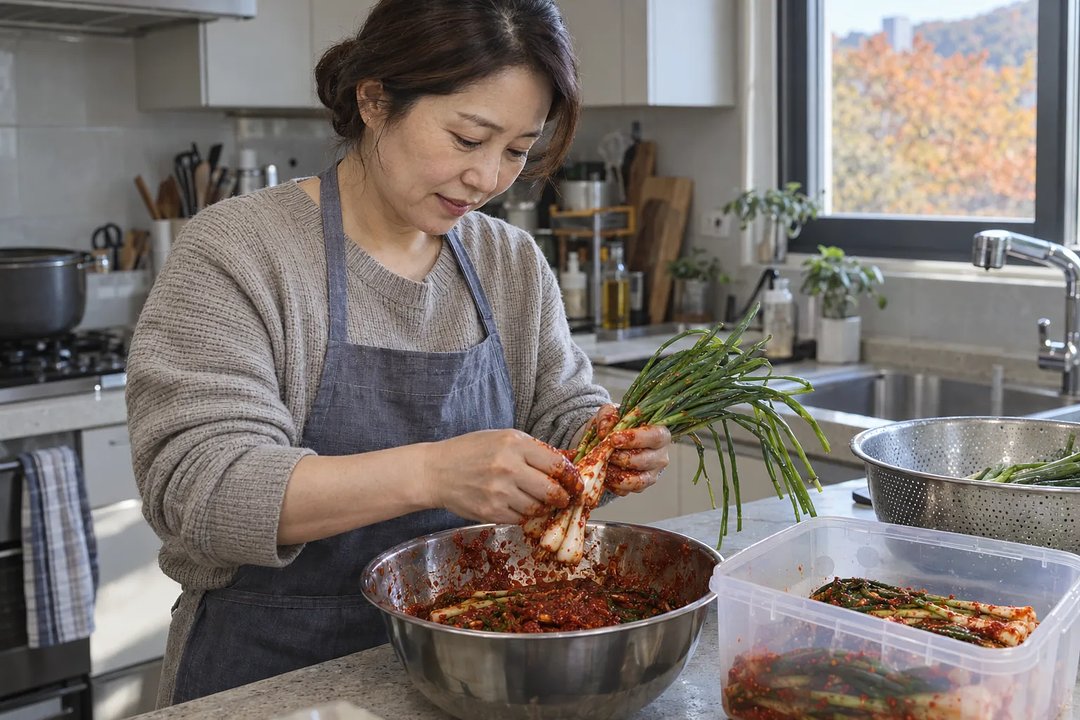
With 500g of scallions ready to prepare, you can make pa kimchi, Korean scallion kimchi, without a separate pre-salting step. Keep this recipe separate from the method that salts the white parts in fish sauce first, because the seasoning amounts and order differ.
Season directly after washing and draining
Remove wilted leaves and dirty outer skins, rinse under running water, then drain thoroughly. Water left from washing can dilute the seasoning. The 500g recipe uses 5 tablespoons of red pepper powder and 3 tablespoons of anchovy fish sauce among its ingredients. Coat the white parts generously first, then lightly coat the green leaves. The leaves do not need prolonged rubbing, so this preparation step stays brief.
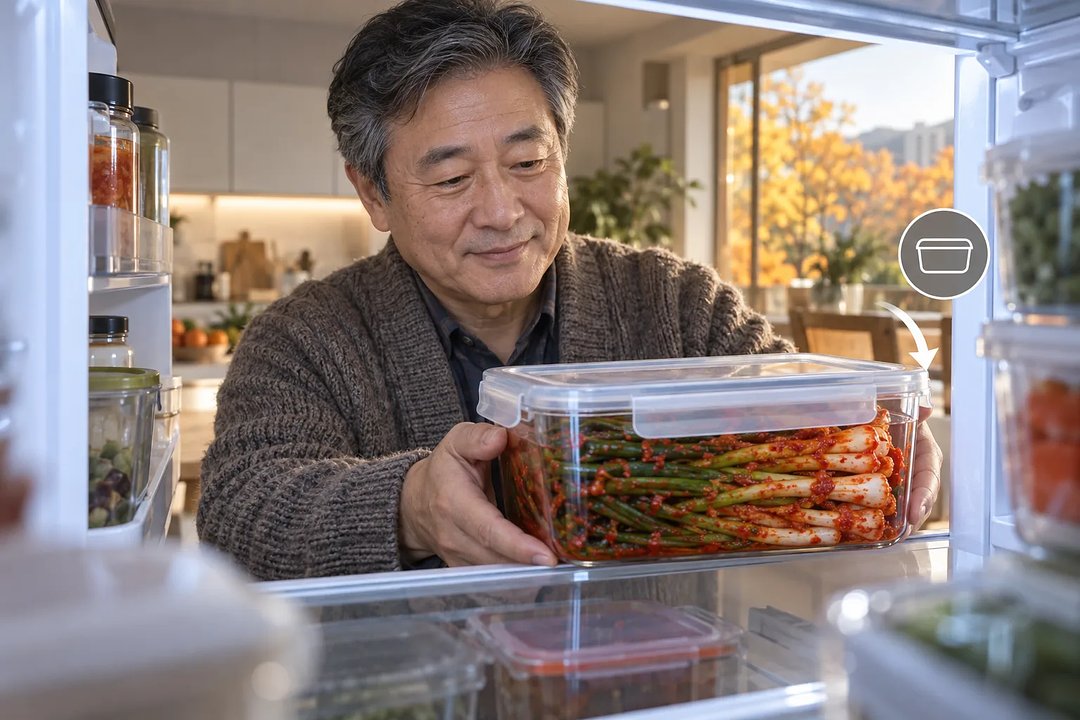 An older man places a lidded clear container of scallion kimchi on a refrigerator shelf.
Check the Pa Kimchi ingredient comparison
In the original article on Injoys, you can find the full seasoning table, calculated amounts for a 250g batch, and a comparison of the two methods. It helps distinguish measured amounts from details that remain unclear, and a repeatable starting point from adjustments to taste.
Read the full article on Injoys
Match the fish sauce to the method
If you are choosing between the methods, use the fish sauce as a preparation cue: anchovy fish sauce goes into the seasoning from the start in the 500g version. In the other version, sand lance fish sauce first salts the white parts and is then reused in the seasoning. Adding it again would count that fish sauce twice.
Check the weight before scaling
For a first batch, you have a clearer starting point with the recipe measured by weight. A bunch is not necessarily 500g, and the recipe does not clarify whether that weight is before or after trimming. The alternative uses about half a bunch without a confirmed weight or fish sauce amount, so do not apply the 250g calculation to it. Both are personal cooking records.
Which measurements need care?
Should the garlic amount be 3 or 4 cloves?
The ingredient list gives 4 cloves, while the instructions give 3. Record the choice; the half-batch calculation follows the ingredient list.
Is glutinous rice paste required?
No, the 500g recipe omits glutinous rice paste. Keep the other ingredients in the proportions given for that version.
Does a tablespoon convert directly to grams?
No, volume and weight are different. The measurement guide defines 1 tablespoon as 15mL, but that does not mean 15 grams of red pepper powder or salted shrimp.
Prepare a dated container
For your next batch, consider writing the preparation date on the container. Close the lid and refrigerate the finished kimchi; the recipes give no shared fixed fermentation period. Consult the original article on Injoys for the full preparation steps and storage checks.
Read the full article on Injoys
This post was written with assistance and published on a channel run by Injoys (injoys.com). The original article and its sources are at the link above.


Comments
Post a Comment