Park Je-ga 1779 appointment and its limits
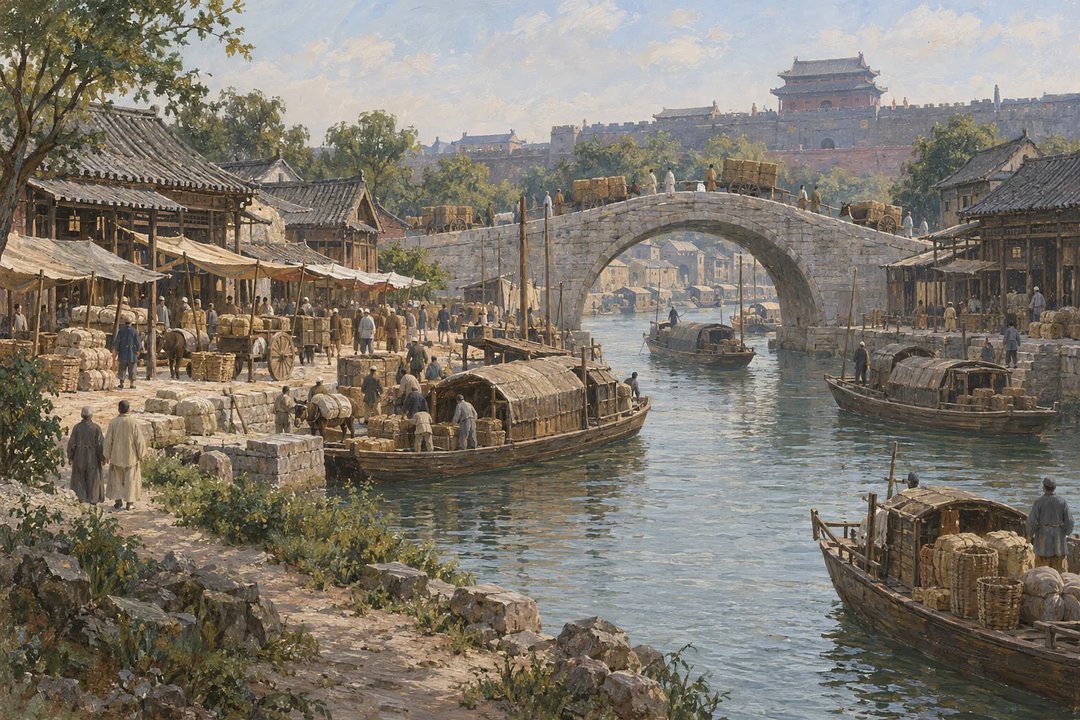
Park Je-ga's appointment in 1779 did not end discrimination against seo-eol, descendants born to concubines. If you are tracing how his government role shaped his ideas, start with the sequence: Bukhagui grew from his 1778 diplomatic mission to Qing China, before he joined Kyujanggak as a book examiner.
Practical reforms reached beyond farming
Look beyond agricultural improvements to understand his proposals. He connected carts, ships, roads and markets with moving produce where it was needed. Better production depended partly on distribution and trade. These proposals aimed to improve ordinary life in Joseon; they do not show that those improvements happened.
His argument about using goods also concerned sustaining the skills needed to make them. Treating it as advice to spend more today would lose that context.
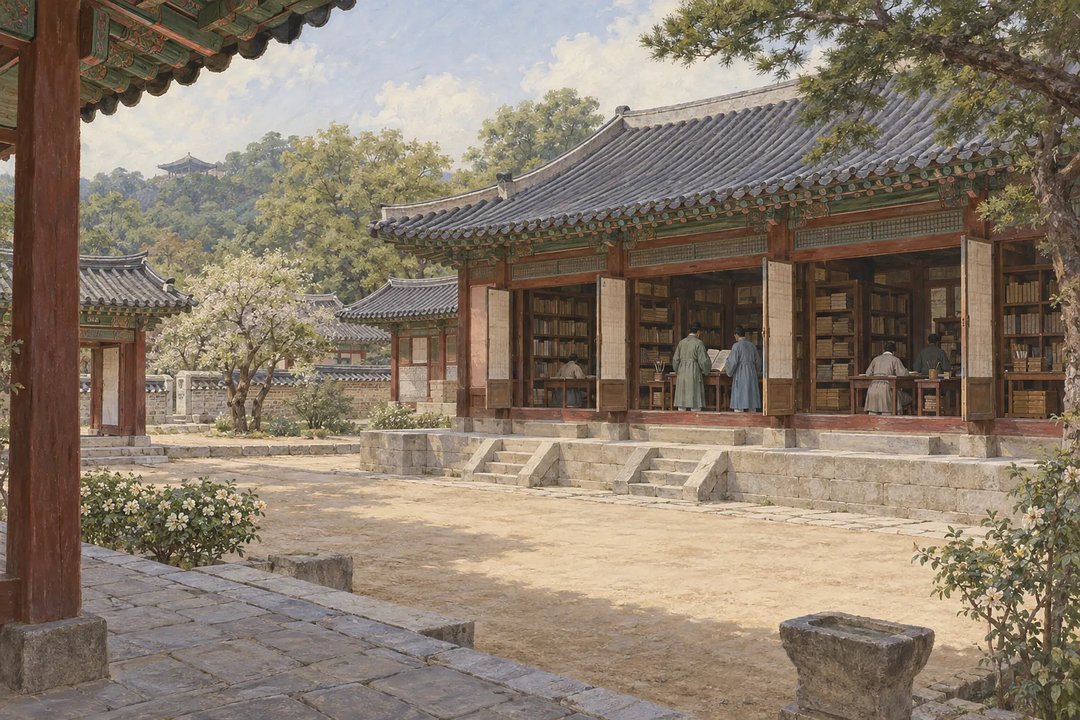 Scholars examine manuscripts beside bookshelves across a palace courtyard in a historical illustration.
Bukhagui's sections and supporting records
In the original article on Injoys, you can compare the Inner and Outer Sections with the Jinso edition, expanded with agricultural material for the king. The timeline and references help separate his writing, government service and the fate of his proposals.
Read the full article on Injoys
A clearer sentence for a history note
If you are drafting a study note, connect the events without inventing a result: his Qing observations informed reform proposals, and his later office offered a channel to the king. Add the outcome separately: Our History Net says his proposals of 1786 were not accepted. That distinction keeps access to power from becoming a claim of policy success.
Keep the historical setting in view
For a first encounter with Korean intellectual history, place these ideas in late Joseon. Northern Learning sought lessons from Qing scholarship and culture for use in Joseon. Read his interest in foreign practices alongside his Confucian outlook; equating it directly with modern openness goes beyond the account.
Details still worth checking
What work did a Kyujanggak book examiner do?
Book examiners helped senior officials with editing, proofreading and publishing. The role used scholarly skills but remained a junior government position.
Did Park Je-ga propose learning Western technology?
Yes. He proposed learning from Western missionaries working in Qing, obtaining books and sending specialists to study. These were proposals, not confirmation that the plans were carried out.
When was Park Je-ga released from exile?
The sources disagree: Our History Net gives 1804, while the Encyclopedia of Korean Culture gives 1805. Confirming the year requires checking the original records.
For a next step, read the preface discussed in the original article on Injoys and compare his stated purpose with the timeline.
Read the full article on Injoys
This post was written with assistance and published on a channel run by Injoys (injoys.com). The original article and its sources are at the link above.


Comments
Post a Comment