Rental Room Flood Safety in Korea: When to Evacuate
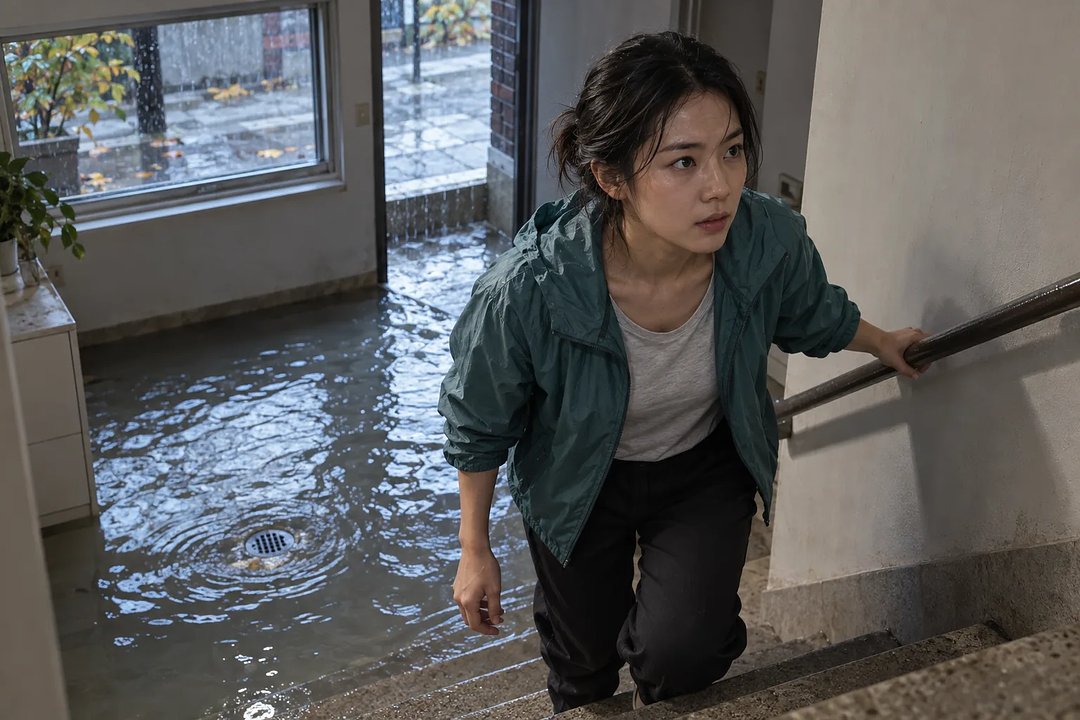
This content applies specifically to South Korea.
Water entering a semi-basement or backing up from a sewer means you need to evacuate immediately, before collecting belongings. Finish drain cleaning and flood barrier installation before flooding begins. After a flood, electrical systems need an expert inspection before use.
Match preparation to the way water can enter
Before rain starts, you can check accessible drain strainers for hair, rubbish and leaves. Persistent slow drainage needs the building manager's attention. Report blocked shared drains to the landlord or building manager, and roadside storm drain problems to the local government.
Clearing a drain helps water flow away; a flood barrier limits water entering through an opening. Neither makes staying inside safe when evacuation is needed. Check ground-level windows and stairs in a semi-basement, and roof drainage and ceiling stains in a rooftop unit. Stay off the roof during strong winds and heavy rain.
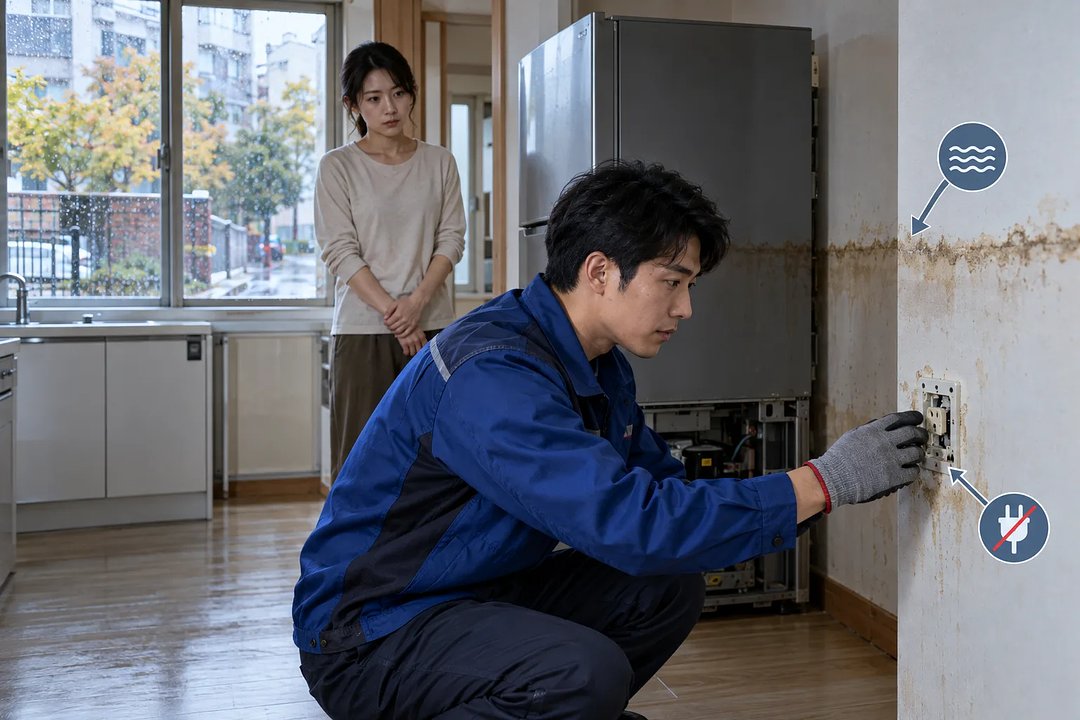
Rental room flood safety, with clear priorities
In the original article on Injoys, you will find housing-specific tables, evacuation steps and official information channels. By separating preparation, evacuation and recovery, the article helps keep cleaning or taking photographs from delaying a safe exit.
Read the full article on Injoys
A practical sequence for an upper-floor renter
If you live upstairs, check your room and the route outside in this order:
- Before rain, check drainage and leaks, then inspect the shared route out. A high room can still depend on a low-lying entrance.
- Locate the shared entrance lock and check how it opens under normal conditions. Knowing the route in advance leaves fewer things to check when leaving.
- If the exit route floods, avoid crossing the water and request rescue from a safe location.
Apply the guidance in its Korean context
The evacuation criteria draw on Ministry of the Interior and Safety guidance dated October 17, 2025. These checks cover semi-basements, low-lying homes, rooftop units and shared building spaces; no floor guarantees safety.
For a home in Korea, you can check Weather Nuri for forecasts and local government guidance for shelters and access restrictions. If stranded, call 119 from a safe location.
Before the next rain, check the shared route outside and confirm local shelter locations through local government guidance. Use the checklist in the original article on Injoys to identify anything still needing attention.
Read the full article on Injoys
This post was written with assistance and published on a channel run by Injoys (injoys.com). The original article and its sources are at the link above.


Comments
Post a Comment