Sehando by Kim Jeong-hui: Jeju Exile and Meaning
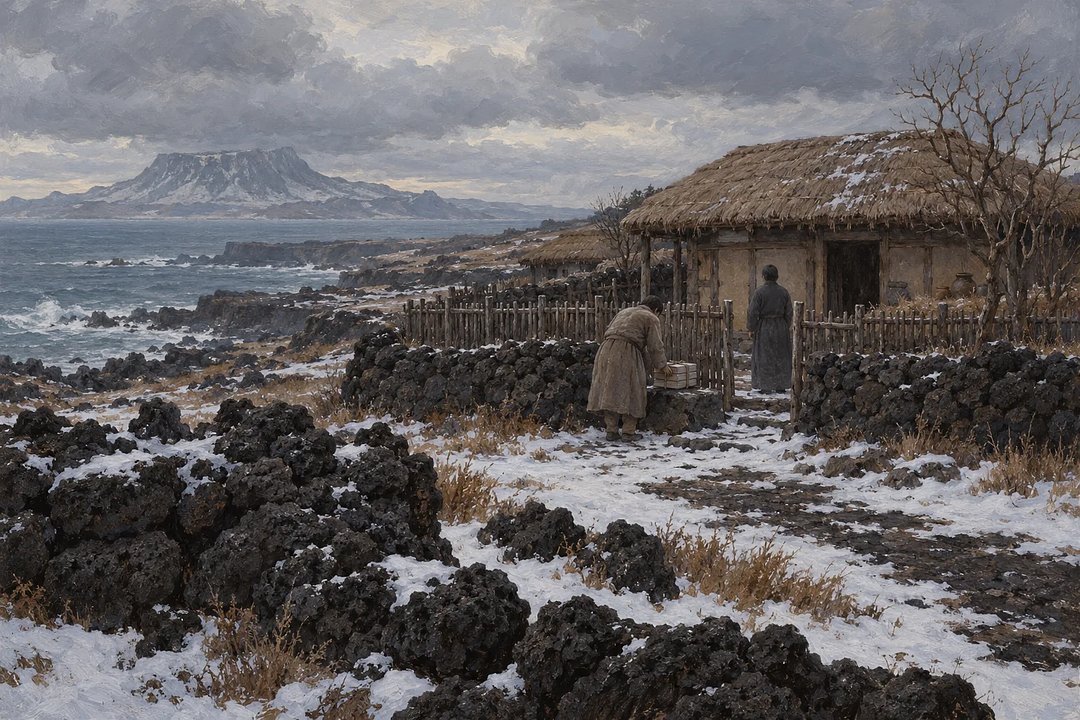
Sehando was painted during Kim Jeong-hui's exile on Jeju in 1844 as thanks to his student Yi Sang-jeok for sending books. If you are trying to understand the long scroll, first separate Kim's painting and inscription from the writings added later.
Read the image with its inscription
You can understand the sparse winter scene more clearly by reading it alongside Kim's explanation. Yi continued sending books after Kim lost his influence, sustaining scholarly contact during isolation. The pines and cypresses express that steady loyalty: hardship revealed it rather than created it.
Literati painting conveys a scholar's thoughts and learning through images. Here, the writing helps explain why a simple house and trees carry meaning beyond a winter landscape.
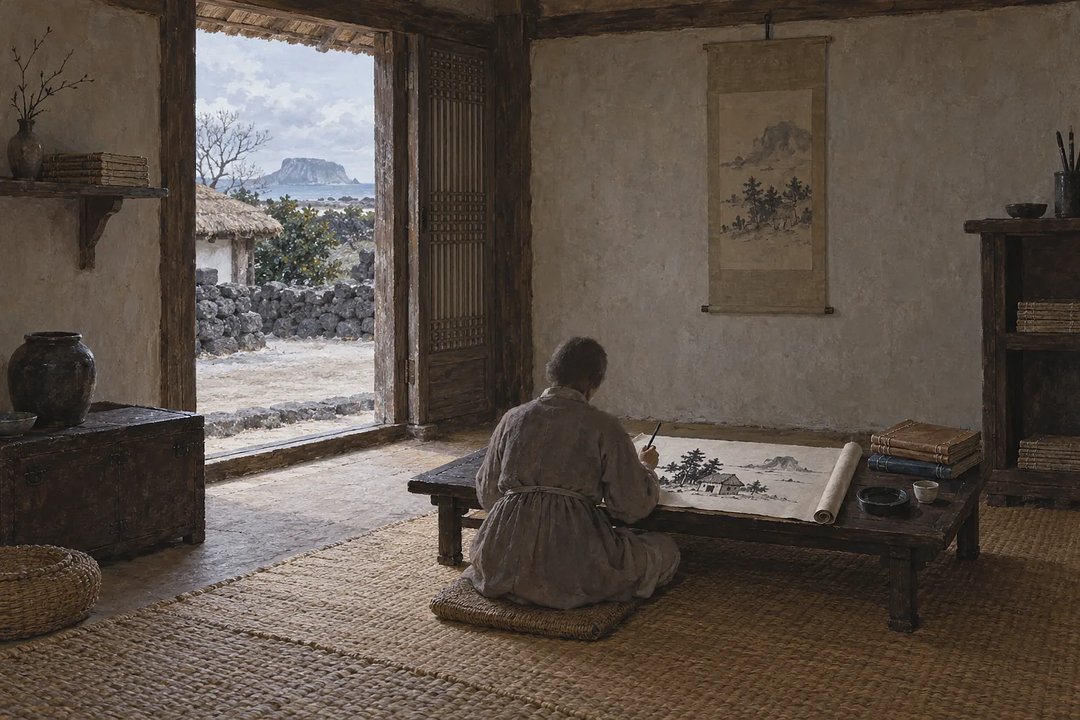 A figure seen from behind paints a house and trees at a low table beside stacks of books in a spare Jeju room.
What Sehando's records clarify
In the original article on Injoys, you will find a visual interpretation table and a timeline separating the painting's creation from later responses and changes in ownership. Its distinction between documented facts and interpretation helps keep an appealing reading from becoming an unsupported claim.
Read the full article on Injoys
A check before quoting the scroll
If you are preparing a caption or study note, check these details together:
- Identify the portion shown: a cropped painting and the complete scroll contain different records.
- Match any quoted writing to its author and year. Kim's painting and inscription date to 1844; the Qing scholars' responses date to 1845.
- Check dates rather than relying on position. Kim Jun-hak's 1914 text appears near the beginning, before Kim Jeong-hui's work.
Separate historical evidence from interpretation
Whether you are studying the artwork or its history, treat the inscription as evidence of Kim's gratitude and the later responses as evidence of how others understood it. Readings of empty space as isolation or stillness remain interpretations. The museum also leaves the owner of the square Jangmusangmang seal and the person who applied it unidentified.
What else is confirmed?
Does the painted house show Kim's exile residence?
The records discussed do not establish that it depicts his actual residence. Its creation on Jeju does not identify the building shown.
When did Sehando become a National Treasure?
It was designated a National Treasure on December 31, 1974. Its current official name is Sehando by Kim Jeong-hui.
For a visit, you can check the National Museum of Korea's latest exhibition information to confirm whether the work is on display. It holds the work following Son Chang-geun's donation in 2020. For the ownership timeline and supporting distinctions, consult the original article on Injoys.
Read the full article on Injoys
This post was written with assistance and published on a channel run by Injoys (injoys.com). The original article and its sources are at the link above.


Comments
Post a Comment