Silla-Tang War: The 7-Year Timeline
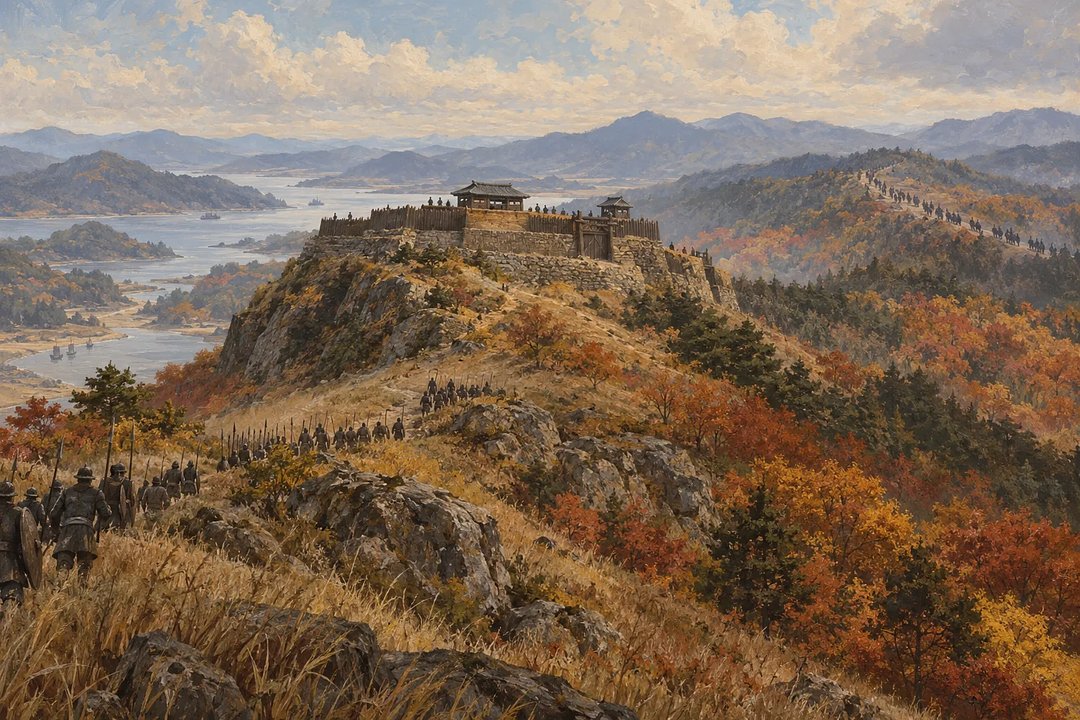
Maesoseong did not end the Silla-Tang War. If you are trying to place its decisive battles, distinguish the land victory in 675 from the naval victory at Gibeolpo in 676, the usual endpoint. The conflict ran from 670 to 676, counted as 7 years including both endpoints.
Separate the turning point from the ending
You can follow the conflict through a dispute over who would govern the former territories of Baekje and Goguryeo, states Silla and Tang had defeated together. Tang established governing bodies in the conquered lands; Silla sought control of territory.
Silla lost at Seokmun in 672 and Chiljungseong in 675. Maesoseong in 675 weakened Tang's land offensive after those setbacks. Gibeolpo in 676 marked the war's close, but pressure from Tubo, a state centered on the Tibetan Plateau, also influenced Tang's strategy. Researchers differ on the weight of each factor.
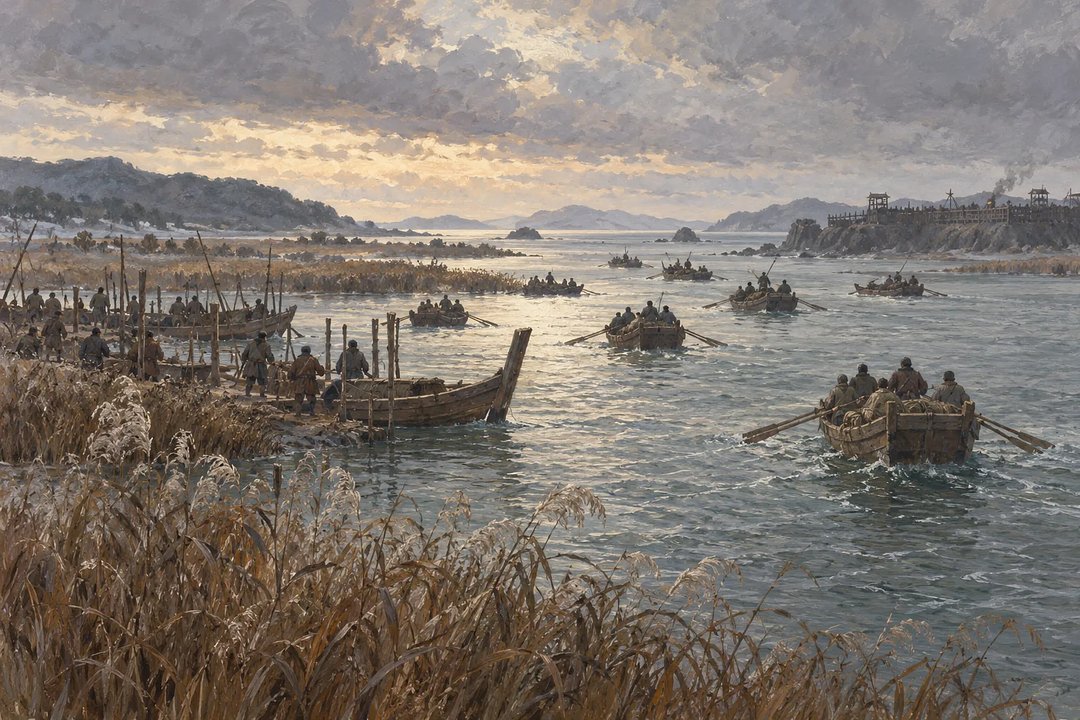 Wooden boats cross a broad, reed-lined river estuary beneath a cloudy sky.
Read the Silla-Tang War evidence in context
In the original article on Injoys, you will find a dated timeline and a comparison of Maesoseong and Gibeolpo that clarify their different roles. Its distinction between historical records and later interpretations helps explain why some familiar claims remain disputed.
Read the full article on Injoys
Build a clearer set of study notes
For a compact revision aid, you can separate two kinds of evidence:
- Battle outcomes: distinguish Silla's defeats, its counterattack and the war's usual endpoint.
- Diplomatic claims: treat King Munmu's reply as Silla's argument about territory and its contributions to the alliance, rather than a neutral account.
This keeps a ruler's case for territorial rights from becoming an unquestioned statement of what both sides agreed.
Keep the territorial limits in view
If you are studying Korean unification, distinguish victory from completed territorial control. Silla did not acquire all former Goguryeo territory. A separate record concerning land south of the Pae River, meaning the Daedong River, dates to 735; the end of fighting in 676 does not establish that every area was already under Silla's rule.
Common questions about the records
Were 200,000 Tang troops definitely at Maesoseong?
No, the number is disputed. The Samguk sagi records 200,000, but Korean History Database notes consider possible exaggeration or a cumulative count of troops mobilized.
Was Salsu a battle in this war?
No. Salsu was fought between Goguryeo and Sui in 612; the Silla-Tang War involved Silla and Tang.
For the next step, compare the two battles in the original article on Injoys, keeping its lunar-calendar dates distinct from solar-calendar dates.
Read the full article on Injoys
This post was written with assistance and published on a channel run by Injoys (injoys.com). The original article and its sources are at the link above.


Comments
Post a Comment