Space Data Centers $200 per kg Cost Scenario
$200 per kg is a conditional launch-cost scenario for the mid-2030s, not a current launch price or the point at which an entire business becomes profitable. If you are assessing space data center claims, that distinction changes what the figure can support.
What the evidence actually supports
Google's 2015 SpaceX investment was linked to satellite internet. No confirmed evidence establishes that orbital data centers were its purpose. Project Suncatcher, announced in 2025, is separate research into AI computing in space.
For you, the useful distinction is between transmitting data through satellites and processing it in orbit. Running AI on a satellite demonstrates a capability; it does not establish the profitability of a large computing service. Launch costs, cooling, communications and component reliability need separate assessment.
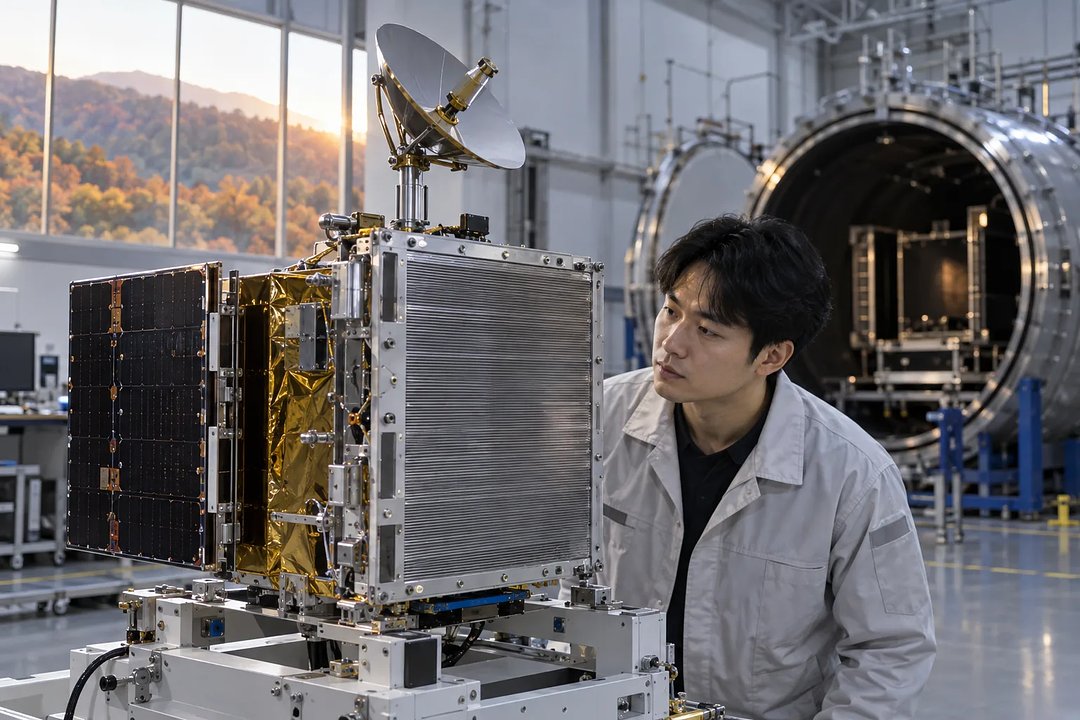
 Technician checking a cable connection beneath a satellite dish beside a data center
Where the fuller comparison helps
The original article on Injoys separates investment history, research announcements and orbital demonstrations using comparison tables and source references. Follow those distinctions to assess what a headline proves before treating it as evidence of commercial readiness.
Read the full article on Injoys
A checklist for reading cost claims
Before accepting a low launch-cost figure, use these checks:
- Identify whether it is an available price or a future scenario.
- Check what the comparison includes. Google's research compares annualized costs of obtaining power in space with electricity spending on the ground.
- Look for separate evidence about cooling, communications and reliable operation before drawing a conclusion about total computing costs.
Space data centers need task-specific checks
If you are considering a particular use, start with where its data originates. Processing satellite observations in orbit may reduce the volume sent to Earth. Large-scale training with ground-generated data also requires uploads and communication between satellites. Suitability depends on the task.
Questions readers ask
Which AI models did Starcloud run?
Starcloud reported running Gemma and training nanoGPT on a satellite carrying an NVIDIA H100. That does not validate commercial training of large AI models.
Does orbital computing eliminate cooling water?
Internal cooling circuits can still use fluids, although heat is mainly released to space through radiation. That differs from water consumed through evaporation in ground-based cooling.
Are Korean HBM suppliers confirmed beneficiaries?
No. HBM production capacity alone does not confirm space-related supply. Product environmental testing and customer adoption need confirmation, and test deliveries differ from recurring commercial supply.
Check the evidence behind the next milestone
Consult the subsequent Google announcements identified in the original article on Injoys to check actual launches and test results against its announced research schedule. (verified value 1 Project Suncatcher prototype satellite launched on October 1, 2026; contact was confirmed and it was operating as expe · source blog.google · checked 2026-10-01)
Read the full article on Injoys
This post was written with assistance and published on a channel run by Injoys (injoys.com). The original article and its sources are at the link above.


Comments
Post a Comment