Triangle Factory Fire 1911 Reform Timeline
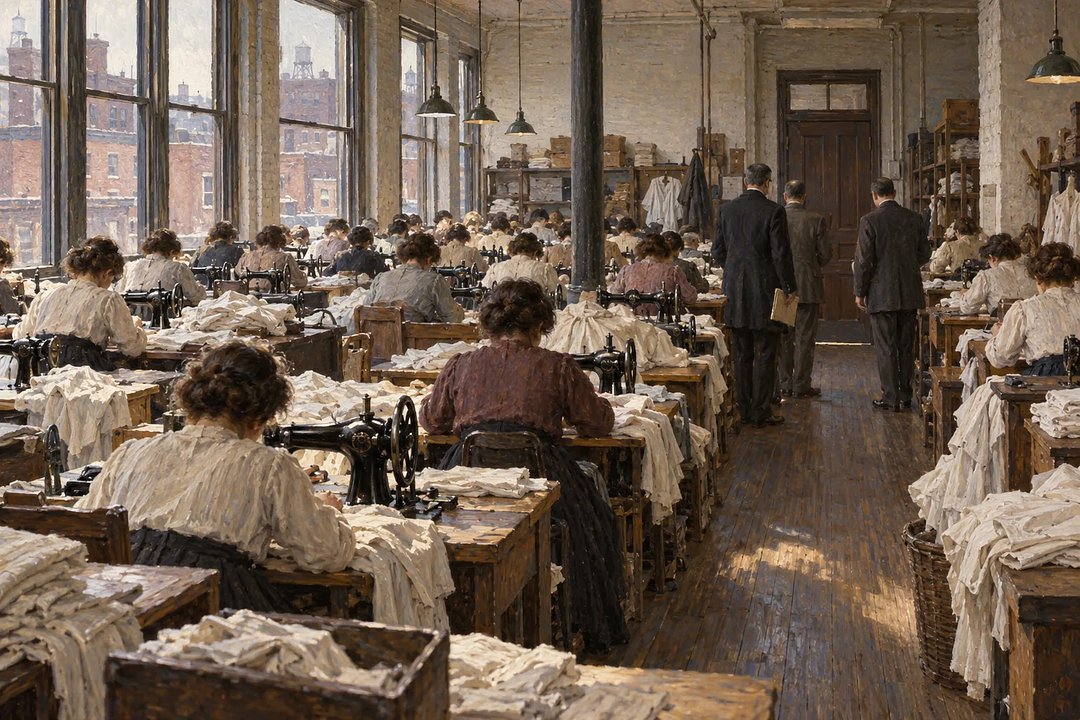
The Triangle Factory fire did not create workplace safety law from nothing. If you are tracing its impact, the key change was New York State's expansion of safety rules and oversight in 1912 and 1913, following the March 25, 1911 fire that killed 146 people.
How demands became safety measures
Consider the connection between workers' demands, documented hazards and legislation. The New York State Factory Investigating Commission gathered evidence through inspections and public hearings. Its work extended beyond fire hazards to sanitation, occupational diseases and enforcement.
The useful distinction is between equipment rules and the system responsible for enforcing them. Factory registration and automatic sprinkler provisions became law in 1912; the Department of Labor was reorganized in 1913. Recommendations were not all adopted together or to the same extent.
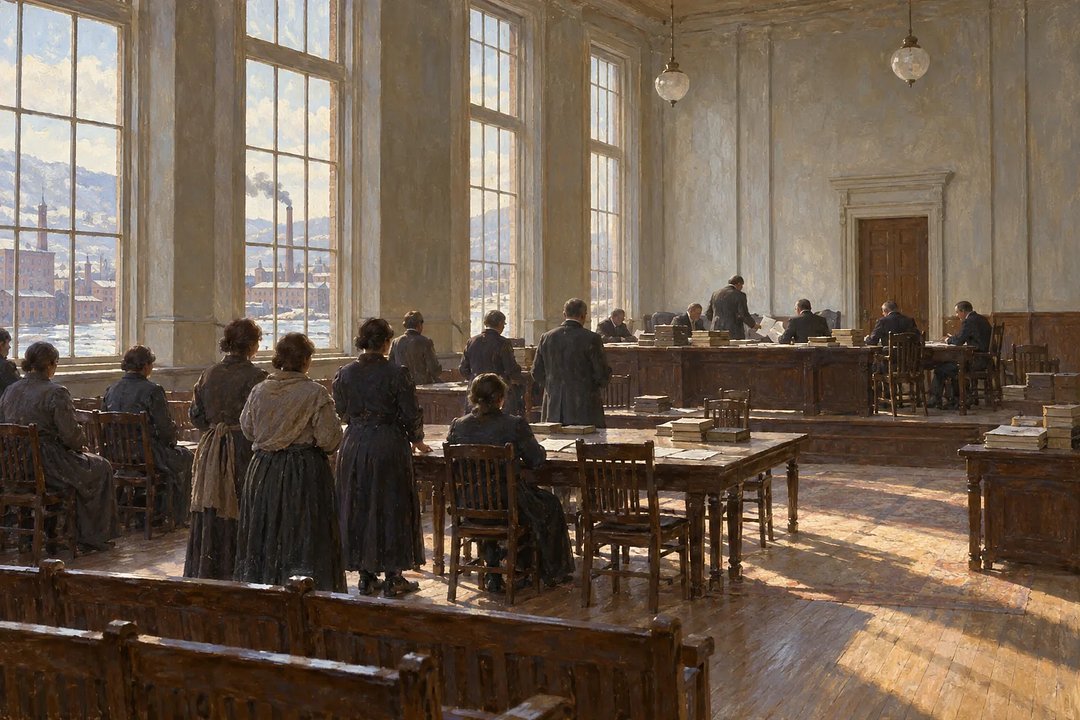 Workers wait in a tall-windowed hall as officials review papers at a long table.
Read the Triangle Factory Fire chronology
In the original article on Injoys, you can follow a dated timeline and comparison tables connecting escape failures, investigative methods and reforms. Its distinction between the criminal trial and preventive legislation helps explain why the owners' acquittal was not a finding that the factory was safe.
Read the full article on Injoys
A checklist for reading the evidence
When taking notes, you can separate three kinds of evidence:
- Reported conditions: workers testified that a door could not be opened.
- Criminal responsibility: the trial considered whether the owners knew the door was locked.
- Prevention: the commission examined risks across workplaces and proposed changes.
Consider using those distinctions to avoid treating a verdict as an assessment of workplace safety.
Keep the geographic scope clear
If you are researching U.S. labor history, keep these changes tied to New York State. New York City pursued a separate course: in October 1911, it moved to establish a Bureau of Fire Prevention to address confusion over inspections and enforcement. Neither account should be read as a nationwide legislative timeline.
Questions about the historical record
Why does the 1912 report give a death toll of 145?
The reason cannot be established from the report excerpt alone. It records 145 deaths, while current Cornell University and public agency accounts give 146.
Did the reforms eliminate factory dangers?
Passing laws alone does not establish that every factory became safe. Evaluating the results requires later inspection, enforcement and accident records.
Consider consulting the preliminary report excerpt at Cornell University's Kheel Center, identified in the original article on Injoys. Consider comparing its recommendations with the changes adopted in each year.
Read the full article on Injoys
This post was written with assistance and published on a channel run by Injoys (injoys.com). The original article and its sources are at the link above.


Comments
Post a Comment