Yi Sun-sin's 1597 Navy Rebuild and Its Background
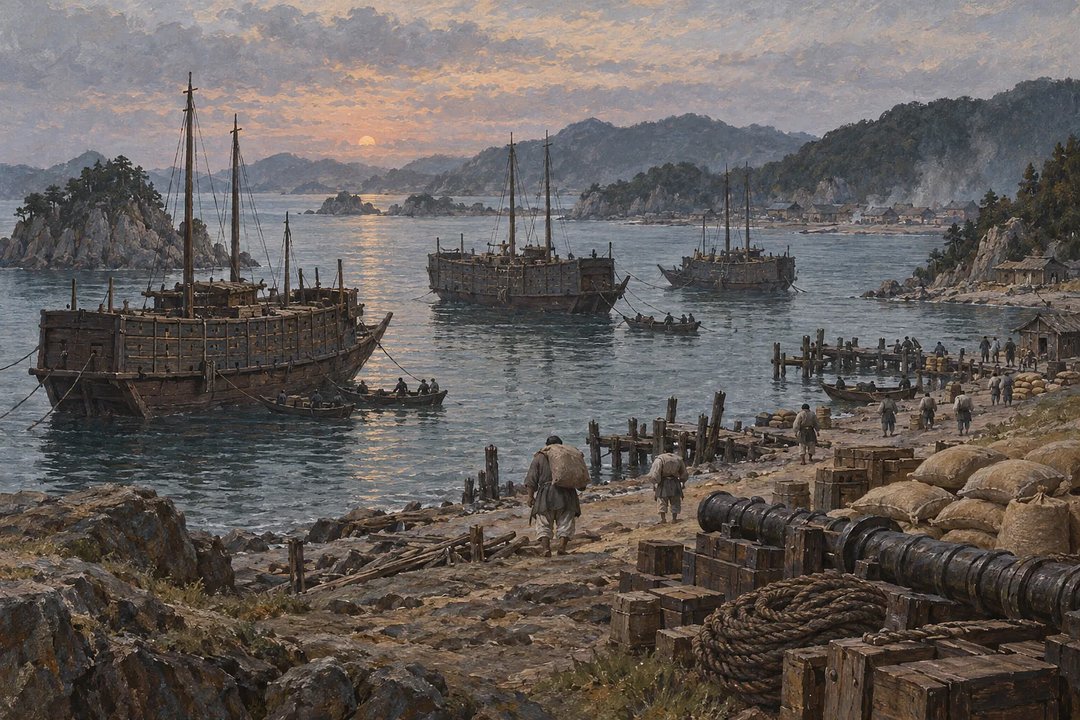
Yi Sun-sin's victory at Myeongnyang followed the rebuilding of a navy devastated at Chilcheollyang in 1597. If you are checking how the smaller fleet survived, the explanation involves experienced crews, supplies, ships and the strait's conditions. The battle took place on September 16, 1597, a lunar calendar date.
How the fleet became able to fight again
After Chilcheollyang, ships, commanders and supplies had been lost. Yi gathered surviving warships, reunited officers and sailors, and secured weapons. If you are tracing the recovery, this connects the eventual victory to the work that made fighting possible.
At Myeongnyang, the narrow channel restricted ship movement. Currents, cannons and the crews' responses also mattered; Yi's flagship fought ahead before other commanders joined the engagement.
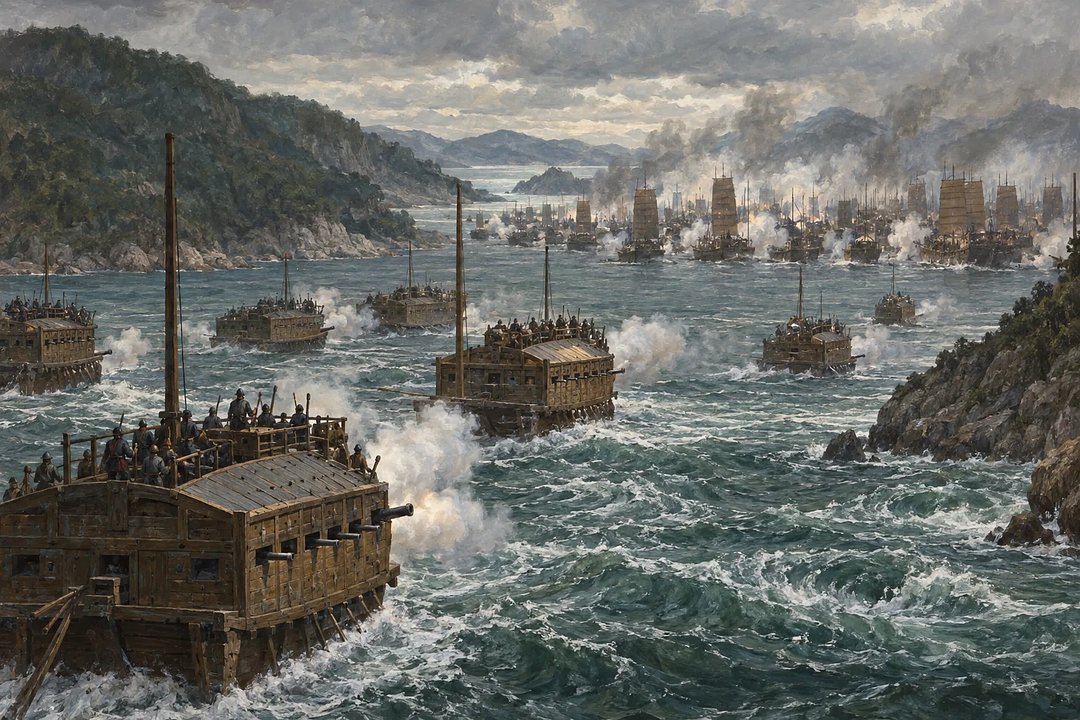 Joseon warships fire cannons toward a distant fleet across a narrow strait with churning water.
Follow Yi Sun-sin's recovery through the records
In the original article on Injoys, you can follow a dated timeline and tables separating battle conditions from uncertainties. Its useful distinction between recorded observations and later explanations helps clarify which details need careful attribution.
Read the full article on Injoys
A quick check before using ship counts
If you are writing a study note, attach each number to its context:
- 12 warships describes the early rebuilding effort; 13 is the usual count for the battle.
- 133 Japanese ships describes the scale of the engagement, not the entire fleet nearby.
- 31 Japanese warships destroyed is the outcome described by Our History Net and the encyclopedia, not the destruction of the whole fleet.
Keep the place and period clear
When you place the battle on a map, Myeongnyang Strait is Uldolmok, between Jindo and Haenam in Korea. Consider tracing the recovery beyond the victory: the navy continued gathering personnel and supplies at bases including Gohado and Gogeumdo. The war had not ended.
Which familiar details need checking?
Did turtle ships or chains help win at Myeongnyang?
Our History Net rejects claims that turtle ships participated or that chains were installed across the strait. Its explanation considers the panokseon warships, artillery, terrain and troops together.
Are the two versions of Nanjung Ilgi identical?
Their contents and publication histories differ. Seven handwritten volumes survive; the collected version was included in the 1795 Yi Chungmugong Jeonseo. Check the edition when citing the diary.
For your next reading step, compare the timeline with the source distinctions in the original article on Injoys before transferring dates or ship counts into notes.
Read the full article on Injoys
This post was written with assistance and published on a channel run by Injoys (injoys.com). The original article and its sources are at the link above.


Comments
Post a Comment